You might have healthy, real food inside the pan, but is the pan itself contributing to disease in your body?
Dr. Josh Axe explains what cookware to avoid and what to use instead.
You might have healthy, real food inside the pan, but is the pan itself contributing to disease in your body?
Dr. Josh Axe explains what cookware to avoid and what to use instead.
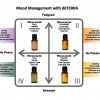
Emotions play a significant role in our overall health and essential oils can provide tremendous benefits in helping us create emotional stability. In this video, Dr. David K. Hill discusses how essential oils can be used to help our emotional health.

Every batch of dōTERRA® essential oils is subjected to strict requirements set forth in the CPTG Certified Pure Therapeutic Grade® quality protocol. This protocol ensures potency, purity, and consistency batch to batch.
The CPTG testing begins immediately after distillation with each oil being reviewed for its chemical composition. A second round of testing is carried out at our production facility to ensure that what was distilled and tested is the same essential oil as was received. A third review of the chemistry of the oil is conducted in a three-phase procedure as the oils are packaged into the bottles we use as consumers. Each of these tests confirms that the essential oil is free of contaminants and unexpected alterations during production.
The CPTG Certified Pure Therapeutic Grade quality protocol includes the following tests:
While there is a science to the distillation of essential oils, it is also an art. Distillers not only rely on years of experience, they also employ modern technologies and techniques.
The most common method of extracting essential oils is a low-heat steam distillation process. In this process, pressurized steam is circulated through plant material. The essential oils are liberated from the plant and carried away by the steam. When the steam cools, the water and oils naturally separate and the oil is collected. To ensure the highest quality oil extract with the correct chemical composition, the temperature and pressure must be closely monitored. Too little heat or pressure and the oil will not release; too much, and the oil’s composition and potency will be affected.
Compression, in which plant parts are pressed to squeeze out the essential oil, is another common method of distillation. Many citrus oils are expressed in this manner.

Editor’s note: This article originally appeared in Runner’s World a few years ago. The article remains popular online, and the rules are as good now as they were when first published.
In most cases, these rules started out as a lightbulb over one runner’s head. After a while, that runner told a few running buddies (probably during a long run), word spread, and before you know it, coaches were testing it, sports scientists were studying it, and it evolved from idea to theory to accepted wisdom. Along with each of the rules we present, however, we list the exception. Why? Because, as you also learned in grade school, there’s an exception to every rule.
1. The Specificity Rule
The most effective training mimics the event for which you’re training.
This is the cardinal rule of training for any activity. If you want to run a 10-K at seven-minute-per-mile pace, you need to do some running at that pace. “Runners are best served by running at goal pace and in the expected environment of that race,” says Ann Snyder, Ph.D., director of the human performance lab at the University of Wisconsin-Milwaukee.
The Exception: It’s impractical to wholly mimic a race–particularly longer distances–in training because it would require extended recovery. So, when doing race-specific training, keep the total distance covered shorter than the goal race, or run at your race pace in shorter segments with rest breaks (interval training).
2. The 10-Percent Rule
Increase weekly training mileage by no more than 10 percent per week.
Joe Henderson, the first editor of Runner’s World, and Joan Ullyot, M.D., author of three women’s running books, first popularized the 10-percent prescription in the 1980s. “I noticed that runners who increased their training load too quickly were incurring injuries,” says Dr. Ullyot.
The Exception: If you’re starting at single-digit weekly mileage after a layoff, you can add more than 10 percent per week until you’re close to your normal training load.
3. The 2-Hour Rule
Wait for about two hours after a meal before running.
“For most people, two hours is enough time for food to empty from the stomach, especially if it’s high in carbohydrate,” says Colorado sports dietitian and marathoner Cindy Dallow, Ph.D. “If you don’t wait long enough, food will not be properly digested, raising the risk of abdominal cramps, bloating, and even vomiting.”
The Exception: You can probably run 90 minutes after a light, high-carb meal, while you may need up to three hours after a heavy meal that’s high in protein and fat.
4. The 10-Minute Rule
Start every run with 10 minutes of walking and slow running, and do the same to cool down.
“A warmup prepares your body for exercise by gradually increasing blood flow and raising core muscle temperature,” says Jerry Napp, a Tampa Bay running coach. “The cooldown may be even more important. Stopping abruptly can cause leg cramps, nausea, dizziness, or fainting.”
The Exception: It takes less than 10 minutes to rev up on warm days.
5. The 2-Day Rule
If something hurts for two straight days while running, take two days off.
Two straight days of pain may signal the beginning of an injury. “Even taking five days of complete rest from running will have little impact on your fitness level,” says Troy Smurawa, M.D., team physician for USA Triathlon.
The Exception: If something hurts for two weeks, even if you’ve taken your rest days, see a doctor.
6. The Familiar-Food Rule
Don’t eat or drink anything new before or during a race or hard workout.
Stick to what works for you. “Your gastrointestinal tract becomes accustomed to a certain mix of nutrients,” says Dallow. “You can normally vary this mix without trouble, but you risk indigestion when prerace jitters are added.”
The Exception: If you’re about to bonk, eating something new is probably better than eating nothing at all.
7. The Race-Recovery Rule
For each mile that you race, allow one day of recovery before returning to hard training or racing.
That means no speed workouts or racing for six days after a 10-K or 26 days after a marathon. The rule’s originator was the late Jack Foster, the masters marathon world record holder (2:11:18) from 1974 to 1990. Foster wrote in his book, Tale of the Ancient Marathoner, “My method is roughly to have a day off racing for every mile I raced.”
The Exception: If your race effort wasn’t all-out, taking fewer recovery days is okay.
8. The Heads-Beats-Tails Rule
A headwind always slows you down more than a tailwind speeds you up.
So expect to run slower on windy days. “I disregard the watch on really windy days because headwinds cost me 15 to 25 seconds a mile, and I only get a portion of that back after I turn around,” says Monte Wells, a longtime runner in Amarillo, Texas, America’s windiest city. “The key is to monitor your effort, not your pace. Start against the wind, so it’s at your back in the second half.”
The Exception: On point-to-point runs with the wind at your back, you’ll fly along faster than usual.
9. The Conversation Rule
You should be able to talk in complete sentences while running.
A recent study found that runners whose heart and breathing rates were within their target aerobic zones could comfortably recite the Pledge of Allegiance. Those who couldn’t were running faster than optimal.
The Exception: Talking should not be easy during hard runs, speedwork, or races.
10. The 20-Mile Rule
Build up to and run at least one 20-miler before a marathon.
“Long runs simulate the marathon, which requires lots of time on your feet,” says Gina Simmering-Lanterman, director and marathon coach of the Denver Fit training program. “And knowing that you can run 20 miles helps you wrap your head around running 26.2.”
The Exception: Some coaches believe experienced marathoners can get by with a longest run of 16 to 18 miles, while other coaches suggest runs up to 24 miles.
11. The Carbs Rule
For a few days before a long race, emphasize carbohydrates in your diet.
“Carbo-loading” became the marathoner’s mantra after Scandinavian studies in 1967 suggested cramming down carbs following a period of carb depletion produced super-charged athletes. Experts now say simply emphasizing carbs a few days before a race over two hours works just as well.
The Exception: There’s a word for carbo-loading during regular training or before a short race: gluttony.
12. The Seven-Year Rule
Runners improve for about seven years.
Mike Tymn noticed this in the early 1980s and wrote about it in his National Masters News column. “My seven-year adaptation theory was based on the fact that so many runners I talked to ran their best times an average of seven years after they started,” he recalls.
The Exception: Low-mileage runners can stretch the seven years to well over a decade before plateauing.
13. The Left-Side-Of-The-Road Rule
To keep safe, run facing traffic.
“While running, it’s better to watch the traffic than to have it come up from behind you,” says Adam Cuevas, a marathoner and chief of the Enforcement Services Division of the California Highway Patrol. It’s the law in California and many other states to run on the left side unless you’re on the sidewalk.
The Exception: The right side of the road is safer when running into leftward blind curves where there’s a narrow shoulder. The right side can also be safer if there’s construction on the left side.
14. The Up-Beats-Down Rule
Running uphill slows you down more than running downhill speeds you up.
So, you can expect hilly runs to be slower than flat runs. “You don’t get all of the energy that you expend going uphill back when you run downhill,” explains Nimbus Couzin, Ph.D., a marathon-running physics instructor at Indiana University Southeast. “That’s because when your feet strike the ground on a descent, a lot of energy is lost.”
The Exception: When you run point-to-point with a net elevation drop,your average pace should be faster than on a flat course.
15. The Sleep Rule
Sleep one extra minute per night for each mile per week that you train.
So if you run 30 miles a week, sleep an extra half hour each night. “Sleep deprivation has a negative impact on training,” says David Claman, M.D., director of the University of California-San Francisco Sleep Disorders Center. “The average person needs seven and a half to eight hours of sleep, so increase that amount when you’re training.”
The Exception: The extra sleep may not be necessary for some high-energy folks.
16. The Refueling Rule
Consume a combination carbohydrate-protein food or beverage within 30 to 60 minutes after any race, speed workout, or long run.
“You need an infusion of carbs to replace depleted muscle glycogen, plus some protein to repair and build muscle,” says Nancy Clark, R.D., author of Food Guide for Marathoners. “Ideally, the carb-protein ratio should be 4-to-1. Some examples would be 150 to 300 calories of low-fat chocolate milk, a recovery-sports drink, flavored yogurt, or a bagel and peanut butter.”
The Exception: Immediate refueling is less important if you aren’t running hard again within 24 hours.
17. The Don’t-Just-Run Rule
Runners who only run are prone to injury.
“Cross-training and weight training will make you a stronger and healthier runner,” says TriEndurance.com multisport coach Kris Swarthout. “Low- and nonimpact sports like biking and swimming will help build supporting muscles used in running, while also giving your primary running muscles a rest.”
The Exception: The surest way to run better is to run. So if your time is limited, devote most of it to running.
18. The Even-Pace Rule
The best way to race to a personal best is to maintain an even pace from start to finish.
Most of the 10,000-meter and marathon world records set in the last decade have featured almost metronome-like pacing. “If you run too fast early in the race, you almost always pay for it later,” warns Jon Sinclair, the U.S. 12-K record holder and now an online coach (anaerobic.net).
The Exception: This doesn’t apply on hilly courses or on windy days, when the objective is to run an even effort.
19. The New-Shoes Rule
Replace running shoes once they’ve covered 400 to 500 miles.
“But even before they have that much wear,” says Warren Greene, Runner’s World gear editor, “buy a new pair and rotate them for a while. Don’t wait until your only pair is trashed.” Consider shoes trashed when the spring is gone.
The Exception: A shoe’s wear rate can vary, depending on the type of shoe, your weight, your footstrike pattern, and the surfaces you run on.
20. The Hard/Easy Rule
Take at least one easy day after every hard day of training.
“Easy” means a short, slow run, a cross-training day, or no exercise at all. “Hard” means a long run, tempo run, or speed workout. “Give your body the rest it needs to be effective for the next hard run,” says Todd Williams, a two-time U.S. Olympian and online coach at pushthepace.com. Apply the hard/easy rule to your monthly and yearly training cycles by treating yourself to one easy week each month, and one easy month each year.
The Exception: After the most exhausting long runs and speed workouts, especially if you’re 40 or older, wait for two or even three days before your next tough one.
21. The 10-Degree Rule
Dress for runs as if it’s 10 degrees warmer than the thermometer actually reads.
To put it another way, dress for how warm you’ll feel at mid-run–not the first mile, when your body is still heating up. This means choosing the right apparel. (See the “Dress for Success” table) “On cold days, the new soft-shell tops and tights are light, warm, and breathable,” says Emily Walzer, fabrics editor for Sporting Goods Business Magazine. “On warm days, wear a lightweight performance fabric next to your skin, which will disperse sweat through evaporation.”
The Exception: There’s a limit to how many clothes you can take off without getting arrested, so if it’s in the 70s or warmer, wear minimal lightweight, light-colored apparel.
| Dress for Success | |
| Here’s a cheat sheet to help you dress appropriately for your runs, no matter what the thermometer says. This chart factors in the 10-Degree Rule but doesn’t account for a significant windchill. On very windy days, you may need to dress warmer. | |
| TEMP (in degrees) |
BASIC APPAREL |
| above 70 | Lightweight/light-colored singlet and shorts |
| 60 to 69 | Tank top or singlet and shorts |
| 50 to 59 | T-shirt and shorts |
| 40 to 49 | Long-sleeve shirt and tights or shorts |
| 30 to 39 | Long-sleeve shirt and tights |
| 20 to 29 | Two upper-body layers and one lower-body layer |
| 10 to 19 | Two upper-body layers and one lower-body layer |
| 0 to 9 | Two/three upper-body layers, one/two lower-body layers |
| below 0 | Three upper-body layers, two lower-body layers |
22. The Speedwork-Pace Rule
The most effective pace for VO2-max interval training is about 20 seconds faster per mile than your 5-K race pace.
The best way to increase your aerobic capacity and long-distance speed is through VO2-max interval training. A pioneer of VO2-max training is Jack Daniels, Ph.D., coach at the Center for High Altitude Training in Flagstaff, Arizona. “By stressing your aerobic system,” he says, “this pace optimizes the volume of blood that’s pumped and the amount of oxygen that your muscle fibers can use.”
The Exception: The exact pace is closer to 10 seconds faster per mile than 5-K race pace for fast runners, and 30 seconds faster per mile for slower runners.
23. The Tempo-Pace Rule
Lactate-threshold or tempo-run pace is about the pace you can maintain when running all-out for one hour.
This pace is about 20 seconds slower per mile than your 10-K race pace, or 30 seconds slower per mile than 5-K race pace. “The key benefit of this pace is that it’s fast enough to improve your threshold for hard endurance running, yet slow enough that you don’t overload your muscles,” says Daniels. The ideal duration of a tempo run is 20 to 25 minutes.
The Exception: The exact pace is less than 20 seconds slower per mile than 10-K race pace for faster runners and slightly more than 30 seconds slower per mile than 10-K race pace for slower runners.
24. The Long-Run-Pace Rule
Do your longest training runs at least three minutes per mile slower than your 5K race pace.
“You really can’t go too slow on long runs,” says RW “Starting Line” columnist Jeff Galloway, “because there are no drawbacks to running them slowly. Running them too fast, however, can compromise your recovery time and raise your injury risk.”
The Exception: Galloway says you should run even slower on hot days.
25. The Finishing-Time Rule
The longer the race, the slower your pace.
How much slower? Jack Daniels and J.R. Gilbert spent years compiling a table (see “Predict Your Performance”) that shows how much you should expect to slow down from one race distance to the next. “We did some curve-fitting to come up with a formula that generates a pseudo-VO2-max for each race time,” says Daniels. They sweated the math; now you just need to sweat the race.
The Exception: Terrain, weather, or how you feel on race day could all throw off the table’s accuracy.
| Predict Your Performance | ||||
|---|---|---|---|---|
| Want to know how fast you should be able to run a marathon without actually running one? Look for your most recent race time in one of the columns on the left, then follow it across to your predicted marathon finish time. The chart is based on the best times from runners of various ability levels. | ||||
| 1-MILE | 5-K | 10-K | HALF-MARATHON | MARATHON |
| 4:20 | 15:00 | 31:08 | 1:08:40 | 2:23:47 |
| 4:38 | 16:00 | 33:12 | 1:13:19 | 2:33:25 |
| 4:56 | 17:00 | 35:17 | 1:17:58 | 2:43:01 |
| 5:14 | 18:00 | 37:21 | 1:22:38 | 2:52:34 |
| 5:33 | 19:00 | 39:26 | 1:27:19 | 3:02:06 |
| 5:51 | 20:00 | 41:31 | 1:31:59 | 3:11:35 |
| 6:09 | 21:00 | 43:36 | 1:36:36 | 3:21:00 |
| 6:28 | 22:00 | 45:41 | 1:41:18 | 3:30:23 |
| 6:46 | 23:00 | 47:46 | 1:45:57 | 3:39:42 |
| 7:05 | 24:00 | 49:51 | 1:50:34 | 3:48:57 |
| 7:24 | 25:00 | 51:56 | 1:55:11 | 3:58:08 |
| 7:42 | 26:00 | 54:00 | 1:59:46 | 4:07:16 |
| 8:01 | 27:00 | 56:04 | 2:04:20 | 4:16:19 |
| 8:19 | 28:00 | 58:08 | 2:08:53 | 4:25:19 |
| 8:37 | 29:00 | 1:00:12 | 2:13:24 | 4:34:14 |
| 8:56 | 30:00 | 1:02:15 | 2:17:53 | 4:43:06 |
| Source: “Oxygen Power: Performance Tables for Distance Runners,” by Jack Daniels and J.R. Gilbert. | ||||

While I was looking over my post on apple cider vinegar today, I couldn’t help but think about a man who has impacted so many people from the city of Philadelphia. I remember him speaking it about apple cider vinegar many times. I also remember him stopping a game when a girl cursed at the official and he told her to leave. He would come to the games and watch. He was there and knew what was happening. I played on the South Philadelphia team because NJ didn’t have a team in this league and it was recommended to help improve my game. We practiced with the boys most of the time and they were coached by a couple of very tall and disciplined POs in the city, T and Claude. A teammate and I got rides over to practice with a man whose son played for the boys team who was also from our area. My dad would come to the games and take my friend and I to our next game back in NJ for our high school. That was how my summer went most days in high school and I loved it.
William Randolph “Sonny” Hill (born July 22, 1936) is a former basketball player and announcer. He is a member of the Philadelphia Sports Hall of Fame, and current sports radio personality in Philadelphia Pennsylvania. He also serves as an executive advisor for the Philadelphia 76ers. He is known as Mr. Basketball in Philadelphia for founding the eponymous Sonny Hill League and for his many contributions to the game.

Dr. Axe shares how you can cleanse your colon, detoxify your cells, and heal your cell membrane, using the Budwig Protocol.
Johanna Budwig originally created this formula to help treat cancer patients and help people overcome their health issues.
I believe this formula, along with the Gerson Therapy are two of the most powerful ways to help heal your body.
The original Budwig formula has three main ingredients, but he has added a few in to create what I call the “Beyond Budwig Protocol.”

I am sure that most people would agree that stress can impact our health in a negative manner. So part of functioning at an optimum health level will include reducing stress.
Reduce Stress ~ Stress is toxic
Therefore, breaking cycles that increase or add to stress in our lives is key. Part of that includes our thought lives. There is much scientific data that supports these statements. I would suggest that each person try to renew ourselves in this area. You can renew your mind. There is a process that each individual goes through before he or she chooses to act. First we observe through our senses. We either see, hear, taste, touch, or smell something. Then a cycle occurs all interacting together. We give ourselves instructions. We have thoughts about ourselves. And we have body responses associated with these thoughts and instructions. Sometimes a body response triggers a thought but sometimes it’s the other way around… See the chart below:

The first step in renewing one’s mind includes noticing and taking hold of our thoughts(self-thought) and instructions(self-talk) that we are giving to ourselves. Capture your thoughts. Then, agree with what is productive and true and disagree with what is harmful, unproductive and/or lies that you may have picked up in toxic encounters in your travels. It may be that you may notice a physical response (body response) first that is connected to your self-thought or self-talk. All three are happening at the same time, but some people are more aware of their physiology and for others it may be their thought life. (Zoom in to make the bigger.)


Sometimes I have clients who will tell me that they don’t have this cycle or part of it happening in them, but I will tell you that I can guarantee that it is there. During difficult times or even just by watching others in our environments, people sometimes train themselves to ignore or numb thoughts and feelings in maladaptive ways. Ignoring their existence only allows the patterns that we don’t like or want to continue impacting our minds and bodies. Many times, in our core, there are driving beliefs about ourselves that are extremely unproductive and sometimes flat out lies. Yet, when left unchecked, we are actually choosing to allow them to have power in our lives.
I would encourage you to examine your thoughts and improve your overall health by kicking out what really doesn’t belong in your head. Really try to focus on thoughts that are “true, honest, just, pure, lovely, of good report, virtuous, and praiseworthy, think on these things.” Pay attention to negative thoughts and instructions you may be giving yourself and change them. For example: I’m not important enough, or I don’t deserve to rest yet, or Don’t ask for help or I always do this wrong… can be changed to a more truthful thought … I am important, I am allowed to rest too, Speak up for what is best for others AND myself, I am going to get this down…
Dr. Caroline Leaf, a cognitive neuroscientist with a PhD in Communication Pathology specializing in Neuropsychology explains thoughts and physical connection very well.
Here are two short 1 or 2 minutes videos she put out:
Part One:
Part Two:

dōTERRA is committed to providing the purest, most potent essential oils possible.
dōTERRA employs a global network of farmers who knows intimately the process of growing plants for essential oils.
Every dōTERRA essential oil is put through the highest standard of rigorous and thorough testing and sets the bar for quality, purity, efficacy, and consistency.
Experience the dōTERRA difference today.

When you show up at my college team’s practice, the banter often isn’t about the difficulty of the workout or the humidity—it’s about my assistant coach and me. The men find it a challenge to drop the coaches on a tempo run. Not because we’re in phenomenal shape or because our team isn’t good. No, we’re known for our “old-man strength.”
Old-person’s strength is our ability to complete longer aerobic efforts, whether tempo runs or long runs, despite not having the current fitness or training to justify performing at that level. While in my heyday of competing, I might have run 100 or more miles per week with multiple speed workouts; I now settle for around 65 miles and squeeze in a workout once every three weeks. Despite this reduced volume and intensity, I can still run tempos and long runs at paces close to, or sometimes better than, I did before.
From a physiological standpoint, this phenomenon makes perfect sense. The body adapts well to repeated training stress, with the goal of becoming as efficient as possible at doing the activity that is causing the stress. My brain has built stronger connections to my muscles and cardiovascular system—recruiting the necessary fibers and oxygen. After many thousands of miles, the delivery system of blood to the muscles has expanded and increased.
In other words, I’ve developed an efficient freeway system in my body. And even if I don’t have the fastest car, I can get places pretty quickly due to the extensive delivery network created over years. Compare this to a young runner who has a much bigger engine and faster car to drive, but whose “roads” haven’t been fully developed. The key is that I still train enough. Sixty-five miles per week may be only about 60 percent of what I did previously, but it works to maintain all the adaptations.
What can we take away from this lesson of my old-man strength? It’s easier to go somewhere if you’ve been there before. In training, we become adept at what we practice. It seems simple enough, but it has some profound consequences.
It’s easier to maintain something we’ve built than it is to recreate a parameter all over again.
When you’re training for your next race, keep in touch with all workout types and intensities throughout the plan. Don’t go three months without doing a single fast stride. It’s counterproductive. You want to keep those pathways and freeways open for business so that when you really need to go in that direction, like at the end of the season, it’s a quick transition.
The other message? Know your biggest bang for the buck. If I can keep my aerobic gains at 65 miles per week versus 110 miles, the likelihood of getting any significant aerobic gains by increasing my mileage again is minimal. I’ve already developed and maxed out that area. Instead, I should look for improvements in an area where I haven’t fully developed yet.
Renato Canova, Chinese national coach, uses this principle when building yearly mileage. For example, the mileage progression of Saif Saaeed Shaheen, steeplechase world-record holder, increased for four years to 120 miles per week, but then reduced to 100 miles in the fifth year and 80 miles in year six. The reduction to 80 was because his base was built and he just needed to maintain it and attack improvement in other areas instead.
The same principles can be applied to your training. Take advantage of your “old-person’s strength.” If you’re young and developing, build that base up over several years of consistent work to engrain those adaptations. If you’re a bit older, do enough to maintain what got you there, but change up the training to give your body new stimuli and new strengths.
* * *
Steve Magness coaches professional runners and the cross country team at the University of Houston, where he is pursuing a doctorate in exercise science.

There is a super liquid that can increase your energy, fight diabetes, improve your heart health, and support fat burning and weight loss.
Hippocrates used to give this liquid to his patients and it is one of the main ingredients in Dr. Axe’s secret detox drink.
This super liquid is Apple Cider Vinegar.
Apple Cider Vinegar is created by fermenting apple cider, which has a lot of sugar, and turning it into a probiotic rich, healthy liquid.
Lowers Cholesterol – 1 Tbsp of Apple Cider Vinegar in the morning naturally lowers cholesterol by increasing bile production and supporting your liver which helps process and break down cholesterol in your body
Reduces blood sugar levels – 2 Tbsp. of Apple Cider Vinegar in water before a meal will decrease blood sugar levels by 6%
Increase metabolism and support weight loss – Apple Cider Vinegar contains acetic acid which improves your metabolism, aid in weight loss, and lower your blood pressure
Helps fight acid reflux – 1-2 Tbsp. of apple cider vinegar in a glass of water before a meal will fight acid reflux
How to consume Apple Cider Vinegar
1. Put a couple of tablespoons on your salad along with some organic extra virgin olive oil
2. Add 2 tbsp. apple cider vinegar to water sweetened with liquid stevia
3. Add some apple cider vinegar to your homemade bone broth which helps bring out the nutrients.