Category: Mental Well-Being

  • doTERRA Wild Orange Essential Oil ~ Free gift for Registering for the Wellness Workshop by January 5, 2015

    doTERRA Wild Orange Essential Oil ~ Free gift for Registering for the Wellness Workshop by January 5, 2015

    flyer-thumb
    Click Image to Download Flyer

    Our Wellness Workshop is January 11, 2015 and will be followed up on January 12, 2015 with some additional demonstrations.

    In order to be a part of the AromaTouch Massage Sessions on Monday, January 12th, you must register in advance.

    Everyone who registers by January 5, 2015 and comes to the workshop will receive doTERRA’s Wild Orange Essential Oil a free gift.  AND you will receive another gift if you bring a friend.

    Download Flyer

    There is no cost for the workshop but there is a suggested donation of $50.00 for the massage sessions.  If you would like to be a part of the massage session but are not available on Monday, January 12th please contact us in advance to see if we can work something out for you.  The topics of our workshop include:

    Mary Kay Schultz of Ozarks Wellness Center

    The Relationship Between:

    Nutrition, Physical Activity and Mental Health
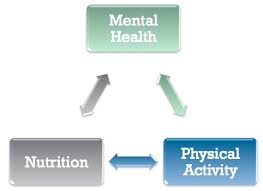
    MH PA N


    Bev and Mike Wagner of doTERRA Essential Oils

    “Natural Solutions to Healthcare an Introduction to Essential Oils”

    Free Hand Massage and Demonstration

    Sign up for AromaTouch Massage on Monday suggested donation $50.00

    aromatouchtech

    Duane Grimes with Rife Technologies

    Using Frequency to Improve Health

    Free Demonstrations Sunday & Monday

    average-body-frequencies

    David Powell with Team RWB

    Team RWB Springfield

    Enriching the Lives of America’s Veterans

    Through Physical and Social Activities

    RWB

    Also for those wanting to stretch their legs after the workshop:

    Join Nii Anyetei Akofio-sowah with Team RWB

    He will carry the American Flag on a one mile run/workout through the city of Buffalo, MO

    The run/workout should start around 5:15 pm @ O’Bannon Bank and will finish at AMVETS

    January 11, 2015 @ 12:30 pm

    Location: O’Bannon Bank   1347 S Ash St, Buffalo, MO 65807
    Join Us at AMVETS after the Presentation (1005 North Ash Street)
    To Register Contact: (609)510-4007 or mkjish@aol.com or ozarkswellness@aol.com
  • Wellness Workshop

    Wellness Workshop

    Do you or someone you know suffer with a chronic mental or physical condition?

    Did you know there are solutions available that could ease your/their burden?

    Ozarks Wellness Center Presents:

    Sunday, January 11, 2015 12:30 – 5:00pm

    Mary Kay Schultz, LCSW: Ozarks Wellness Center

    MH PA N

    The Relationship Between:

    Nutrition, Physical Activity and Mental Health

    Mike and Bev Wagner: DoTerra Essential Oils

    aromatouchtech

    “Natural Solutions to Healthcare an Introduction to Essential Oils”

     Free Hand Massage Demonstrations

    $50.00 Suggested Donation for AromaTouch Technique Massage Demonstrations

    Duane Grimes: Rife Machine Specialist

    average-body-frequencies

    Using Frequency to Improve Health

     Free Demonstrations

    David Powell: Team RWB Springfield

    RWB

    Team RWB Springfield

    Enriching the Lives of America’s Veterans
    Through Physical and Social Activities


    Location: O’Bannon Bank   1347 S Ash St, Buffalo, MO 65807
    Join Us at AMVETS after the Presentation (1005 North Ash Street)
    To Register Contact: (609)510-4007 or mkjish@aol.com or ozarkswellness@aol.com
  • Team RWB Veteran Statisitcs

    Team RWB Veteran Statisitcs

    Team RWB is comprised of both military and civilian team members.  The mission of Team RWB is to enrich the lives of America’s veterans by connecting them to their community through physical and social activity.   Here are some statistics I found on the webpage www. teamrwb.org:


    How many individuals represent Team RWB?

    Founded in 2010, Team RWB and its 56,000 members are bringing veterans, their families, and American citizens together through authentic social interaction, community physical fitness and shared experiences in over 115 communities across the globe.

    How many Americans have been deployed since September 2001?

    Nearly 2.5 million American men and women have deployed in support of Operations Enduring Freedom and Iraqi Freedom since September 2001.

    How many service members will retire in the next 5 years?

    Approximately 1 million service members will retire or separate from the military over the next 5 years.

    How many veterans do not return to their hometown upon completion of service?

    58% of veterans do not return to their hometown upon completion of service.

    How many veterans are more likely to exercise with a group?

    41% of veterans stated that they are more likely to exercise if they can do it with a group or team.

    Are significantly stressed individuals likely to be depressed?

    People who have experienced significant stress are 2.5 times more likely to be depressed.

    What is natural equivalent to SSRI drug therapies for depression and anxiety?

    A number of studies have shown exercise to be the non-drug equivalent of SSRI drug therapies or psychotherapy for depression and anxiety.

    How many veterans are estimated to be undiagnosed with PTSD?

    The VA estimates there are nearly 400,000 untreated cases of post-traumatic stress disorder.

    What percentage of returning combat veterans may have mental health conditions?

    A 2009 Rand report estimates that 26% of returning combat veterans may have mental health conditions (PTSD, anxiety, depression).

  • Back to Basics ~ How to Stop Out of Control Thoughts ~ The 3 C’s Rule

    Back to Basics ~ How to Stop Out of Control Thoughts ~ The 3 C’s Rule

    1. Catch the Thought
    Sometimes in life people find that thoughts come racing through their heads.  I notice this with many who are early in a recovery process. These thoughts make it hard to concentrate and also often cause emotional distress. The first thing to do is to catch the thought. Notice it and take a hold of it.

    capture thought


    2. Check the Thought
    It could be that this thought is not true or helpful.  Sometimes people have thoughts that replay in their heads that are related to beliefs about themselves and the world that are not true but they never learned to challenge them. Don’t be afraid to look at these thoughts and really examine them.

    out of control thoughts


    3. Change the Thought
    Many times the thought is not productive and if this is the case, I encourage you to change the thought to something that is true and helpful.

    thoughts copy


    In my experience, helping people change how they think about themselves and the world around them is one of the most freeing things that we do in therapy.  Some people have been taught from early on in life that they are not important or they will never amount to anything.  Even though nothing can be farther from the truth, they interact in the world based upon this false belief about themselves.  We have the ability to change this process.  When we choose to choose thoughts that are true and more productive there are many benefits.

    Dr. Caroline Leaf describes, “By not controlling our thoughts, we create the conditions for illness – research shows that “fear alone” triggers more than 1400 known physical and chemical responses, and activates more than 30 different hormones in the body. Science believes that thoughts are basically neurological responses to stimuli that are shaped by past experiences – therefore it is important for us to exercise extreme care with regard to what stimuli we allow to enter into our thought processes.  Toxic   waste generated by “toxic thoughts” causes the following illnesses: diabetes, cancer, asthma, skin problems, and allergies just to name a few. Everything we see, hear, or read has the potential to shape our thinking, and what we think about affects us physically and emotionally.

  • The Twelve Steps and Twelve Traditions of Alcoholics Anonymous

    The Twelve Steps and Twelve Traditions of Alcoholics Anonymous

    The Twelve Steps of Alcoholics Anonymous

    1. We admitted we were powerless over alcohol-that our lives had become unmanageable.
    2. Came to believe that a Power greater than ourselves could restore us to sanity.12steps2
    3. Made a decision to turn our will and our lives over to the care of God as we understood Him.
    4. Made a searching and fearless moral inventory of ourselves.
    5. Admitted to God, to ourselves, and to another human being the exact nature of our wrongs.
    6. Were entirely ready to have God remove all these defects of character.
    7. Humbly asked Him to remove our shortcomings.
    8. Make a list of all persons we had harmed, and became willing to make amends to them all.
    9. Made direct amends to such people wherever possible, except when to do so would injure them or others.
    10. Continued to take personal inventory and when we were wrong promptly admitted it.
    11. Sought through prayer and meditations to improve our conscious contact with God as we understood Him, praying only for knowledge of His will for us and the power to carry that out.
    12. Having had a spiritual awakening as the result of these steps, we tried to carry this message to alcoholics, and to practice these principles in all our affairs.


    The Twelve Traditions of Alcoholics Anonymous – Short Form

    1. Our common welfare should come first; personal recovery depends upon AA unity.
    2. For our group purpose there is but one ultimate authority-a loving God as He may express Himself in our group conscience. Our leaders are but trusted servants; they do not govern.
    3. The only requirement for AA membership is a desire to stop drinking.
    4. Each group should be autonomous except in matters affecting other groups or AA as a whole.
    5. Each group has but one primary purpose-to carry its message to the alcoholic who still suffers.
    6. An AA group ought never endorse, finance or lend the AA name to any related facility or outside enterprise, lest problems of money, property and prestige divert us from our primary purpose.
    7. Every AA group ought to be fully self-supporting, declining outside contributions.
    8. Alcoholics Anonymous should remain forever nonprofessional, but our service centers may employ special workers.
    9. Alcoholics Anonymous as such, ought never be organized; but we may create service boards or committees directly responsible to those they serve.
    10. Alcoholics Anonymous has no opinion on outside issues; hence the AA name ought never be drawn into public controversy.
    11. Our public relations policy is based on attraction rather than promotion; we need always maintain personal anonymity at the level of press, radio and films.
    12.  12 steps 12 traditions AA big bookAnonymity is the spiritual foundation of all our Traditions, ever reminding us to place principles before personalities.
  • Boundaries

    Boundaries

    Boundaries:

    Concept 1 ~ Each person is responsible for their own actions and the consequences of those actions.
    Concept 2 ~ We are keeping another person in an immature state by taking responsibility for his/her actions or the consequences for his/her actions.

    In order to ultimately help and love someone, it’s better to be honest with ourselves and them. This will help them grow in character and they will be happier in the long run.

    In the story below, the writer is describing Step 10 (of the 12 steps in AA) ~ “We continued to take personal inventory, and when we were wrong, promptly admitted it.” This is a good illustration of how group members in a good meeting hold each other accountable.

    http://nanaimoaa.org/…/step-10-continued-to-take-personal-…/

    (see note about 12 Steps)

    boundaries-1

  • What is wellness?

    What is wellness?

    Wellness involves examining and improving all aspects of our lives.  In order to preserve wellness, it is important to maintain a well balanced lifestyle.   Some areas of wellness include:

    • Physical Wellness ~Physical wellness promotes proper care of our bodies for optimal health and functioning. There are many elements of physical wellness that all must be cared for together. Overall physical wellness encourages the balance of physical activity, nutrition, personal care and mental well-being to keep your body in top condition.
    • Mental Wellness ~ According to the World Health Organization, mental health is defined as “a state of well-being in which the individual realizes his or her own abilities, can cope with the normal stresses of life, can work productively and fruitfully, and is able to make a contribution to his or her community.” Wellness in this area involves using one’s cognitive abilities to enhance other areas of his/her life.
    • Spiritual Wellness ~ Spiritual wellness the ability to use values and beliefs to clarify one’s purpose in life events. Spirituality is a term used in relation to spiritual wellness. Your “spirit” usually refers to the deepest part of you and is different from your soul. Specific disciplines are essential in order to grow in this area; just as with Physical Wellness.
    • Emotional Wellness ~ Emotional wellness involves the ability to adapt with change and conflict by managing emotions and maintaining balance in other areas of our lives.  Emotional Intelligence (EI) is related to emotional wellness.  Psychology today describes EI as “the ability to identify and manage your own emotions and the emotions of others.  It is generally said to include 3 skills:
      1. Emotional awareness, including the ability to identify your own emotions and those of others;
      2. The ability to harness emotions and apply them to tasks like thinking and problems solving;
      3. The ability to manage emotions, including the ability to regulate your own emotions, and the ability to cheer up or calm down another person.”
    • Social Wellness ~ Social wellness is the ability to relate and connect with people resulting in favorable responses for self and others.

    Wellness is much more than merely physical health, exercise or nutrition. It is the full integration of states of physical, mental, and spiritual well-being. The model used by our facility includes social, emotional, spiritual, mental,  and physical wellness.  This also includes, relationships and fitness at one’s place of employment, financial fitness and many other areas that we see incorporated into our main categories.

    ozarkswellness cov ph

  • Wellness Programs and Recovery Groups

    Team RWB ~ Team Red White and Blue’s (RWB) mission is to enrich the lives of America’s veterans by connecting them to their community through physical and social activity.
    teamrwb.org

    Alcoholics Anonymous ~ “Alcoholics Anonymous (AA) is an international fellowship of men and women who have had a drinking problem. It is nonprofessional, self-supporting, multiracial, apolitical, and available almost everywhere. There are no age or education requirements. Membership is open to anyone who wants to do something about his or her drinking problem.”  AA uses the 12 step recovery model to help recovering alcoholics through the process of change in their lives.
    http://www.aa.org/

    Western MO AA
    http://www.wamo-aa.org/

    Narcotics Anonymous ~ “Narcotics Anonymous (NA) is a nonprofit fellowship or society of men and women for whom drugs had become a major problem. NA is a nonprofessional community support group recovering addicts who meet regularly to help each other stay clean. This is a program of complete abstinence from all drugs. There is only one requirement for membership, the desire to stop using.” NA uses the 12 step recovery model to help recovering addicts through the process of change in their lives.
    http://www.na.org/meetingsearch/download-pdf.php

    Addictions Victorious ~  Addictions Victorious (AV) is a network of Bible centered support and recovery groups. AV meetings are open to men and women of all ages who struggle with various addictions and are seeking lasting change in their lives. AV is also for loved ones and friends who find themselves on the other side of addiction.  Most AV groups use the 12 step recovery model to help recovering addicts and their family members through the process of change in their lives.
    http://www.addictsvictorious.com/meetings_available.php

    Alanon ~ The Al-Anon Family Groups are a fellowship of relatives and friends of alcoholics who share their experience, strength, and hope in order to solve their common problems. Alanon uses the 12 step model to assist friends and family members through the process of change in their lives.
    http://www.missouri-al-anon.org/

    Alateen ~ Alateen is a nonprofessional support group for teenagers who have family members that struggle with addiction.  Alateen uses the 12 step recovery model.
    http://www.al-anon.org/for-alateen

    Naranon ~ The Nar-Anon Family Groups is primarily for those who know or have known a feeling of desperation concerning the addiction problem of someone very near to you.  Naranon uses the 12 step recovery model.
    http://www.nar-anon.org/

    Celebrate Recovery ~ Celebrate Recovery (CR) also referred to as CR, is a Bible- based approach to recovery.  CR uses 8 principals in their recovery program.
    http://www.celebraterecovery.com/

    SOUTHWEST MISSOURI MINORITY HEALTH ALLIANCE ~ DIRECTORY OF COMMUNITY HEALTH RESOURCES
    http://health.mo.gov/living/families/minorityhealth/pdf/SWResourceDirectory.pdf