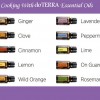
Lavender is one of doTERRA’s best selling essential oils. Watch this video to learn more about this powerful essential oil.


Lavender is one of doTERRA’s best selling essential oils. Watch this video to learn more about this powerful essential oil.
I recently read an article about kids whom the judge said were “brainwashed” by a parent in a custody case. Emotional connections to family are good. It occurred to me that with all of us (kids or adults), our ability to be open to truth or reality can be very clouded by emotions at times. There are things that you can do with your kids before they get into a situation where they can be manipulated by someone who knows how to take advantage of their emotions.
To start with, empower your kids to be comfortable with thinking:

Critical thinking means making clear, reasoned judgments. It involves evaluating information to reach an answer or conclusion. It is disciplined thinking that is clear, rational, open-minded, and informed by evidence. Just like the skills developed on the basketball court or ball field, these need to be developed. The earlier you can start the better.
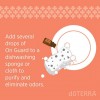
One of dōTERRA’s best-selling essential oil blends, On Guard Protective Blend provides a natural and effective alternative that can help keep your family and home healthy. This proprietary blend features Wild Orange, Clove Bud, Cinnamon, Eucalyptus, and Rosemary. On Guard protects against environmental and season threats and can be taken internally on a daily basis to maintain healthy immune function.
No matter how bad things get in the world around us there is always good work to be done on ourselves. Sometimes people can become immersed in trying to fix or save the world and avoid dealing with our own pain or flaws. Correcting every injustice is an impossible task. It’s usually best left to the God of the universe Who knows exactly what is going on and cares about all the injustices that are taking place a lot more than we do. I am not saying to turn a blind eye to oppression and injustice so please do not misunderstand me. I am also not implying that there is no need for personal boundaries. If someone keeps poking you in the eye and ignores your requests to stop, it may be best to take a step away from their reach. I am talking about focusing so much on others in order to avoid what needs to change in ourselves. Sometimes people can get lost in all the things that need to change in the world around us that we forget to listen to the voice of God with regards to what needs to change in our own hearts and character. This is a form of denial.
In Ecclesiastes Chapters 3 and 4, King Solomon said, “Moreover, I notice that throughout the earth justice is giving way to crime, and even the courts are corrupt. I said to myself, “In due season God will judge everything man does, both good and bad.”… Again I saw all the oppressions that are done under the sun. And behold, the tears of the oppressed, and they had no one to comfort them! On the side of their oppressors there was power, and there was no one to comfort them.” Whether or not a person is interested in the Bible, I think everyone would agree that Solomon was a man of great wisdom. He saw the problems in his civilization but even as a king he knew he was powerless to change all the issues of mankind.
Accepting the world as it is, and focusing on what needs to change in ourselves can be very freeing emotionally. When we are able to say with confidence that we are working on the growth that needs to occur in our own lives, it is so much easier to become less entangled with the issues our neighbors may have.
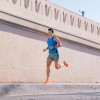
EXERCISE:
Through its actions on hormones that affect the nervous system, exercise also improves TOLERANCE OF STRESS. This is an observation that is particularly intriguing given the links between stress and drug abuse.
Many who abuse drugs or alcohol neglect important components of daily health, wreaking havoc on both emotional and physical well being.
It is important to repair the psychological and physical damage of chemical dependency as well as the damaged mind-body connection.
Exercise in chemical dependency treatment serves many purposes, but there are some primary benefits one can get from exercise during substance abuse treatment and recovery.
In addition, regular exercise fosters improved:
All of these make life much more manageable and enjoyable and recovery that much more possible and sustainable.
Researchers now think there are at least two systems for rewards involving the neurotransmitter, dopamine:
Neuroscientists say the balance between these systems can be altered by drug abuse to the point that the wanting system dominates the liking one.
Serotonin also plays a prominent role in the way hallucinogens act on the brain, greatly increasing serotonin levels in certain brain cells.
Hallucinogens are serotonin “agonists,” which means they are molecularly similar enough to serotonin to dock with serotonin receptors.
Large increases in serotonin levels have also been measured in users of ecstasy.
Ecstasy appears to push the serotonin system into overdrive by interfering with serotonin mop-up transporters, similar to the way cocaine affects dopamine.
Elevated serotonin causes short-term euphoria but depletes it in the longer-term. Chronic ecstasy users, for example, were found to have 50%-80% lower concentrations of serotonin.
Aerobic exercise have a neurochemical basis.
Exercise:
Psychological and emotional benefits of exercise:



Certain decision making styles may be more effective in different situations. However, it is probably obvious that the searching style is the most preferred.
Here is a quiz you can take to determine your style.
DIRECTIONS:
Read each statement and then use the one (1) to five (5) point scale to indicate the degree to which each statement applies to you. If the statement is not at all like you, give yourself a one (1). If it is very much like you, give yourself a five (5).
NOT AT ALL LIKE ME VERY MUCH LIKE ME
|
1 |
2 | 3 | 4 | 5 |
In the Score column, write the number you circled for each corresponding item. Then add and record your
score for each category.
| Item No. | Score | Item No. | Score | Item No. | Score |
| 1
4 5 9 11 16 21 24 26 28 |
3
7 12 13 14 17 19 23 25 29 |
2
6 8 10 15 18 20 22 27 |
|||
| Style 3 | Style 2 | Style 1 |
Graph the totals for each category on the following chart:

Style 1 = Ignoring
Style 2 = Selective
Style 3 = Searching