Team RWB’s mission is to enrich the lives of America’s veterans by connecting them to their community through physical and social activity.
Consider becoming involved with Team RWB where you live and where you race.

Team RWB’s mission is to enrich the lives of America’s veterans by connecting them to their community through physical and social activity.
Consider becoming involved with Team RWB where you live and where you race.

Some people are good at encouraging peers but often condemning towards themselves. If this is you, your thinking could be hindering your productivity. Whether you’re running up a mountain or working in an office, it not a bad idea to examine your thoughts. Take hold of them and challenge the ones that are destructive towards yourself and your goals.
The first step is to allow yourself to understand what is happening in your thought process. Disputing your self-talk means challenging the negative or unhelpful aspects. Doing this enables you to feel better and to respond to situations in a more helpful way.
Learning to dispute negative thoughts might take time and practice, but is worth the effort. Once you start looking at it, you’ll probably be surprised by how much of your thinking is inaccurate, exaggerated, or focused on the negatives of the situation.
Whenever you find yourself feeling depressed, angry, anxious or upset, use this as your signal to stop and become aware of your thoughts. Use your feelings as your cue to reflect on your thinking.
A good way to test the accuracy of your perceptions might be to ask yourself some challenging question. These questions will help you to check out your self-talk to see whether your current view is reasonable. This will also help you discover other ways of thinking about your situation.
There are four main types of challenging questions to ask yourself:
1. Reality testing
2. Look for alternative explanations
3. Putting it in perspective
When you feel anxious, depressed or stressed-out your self-talk is likely to become extreme, you’ll be more likely to expect the worst and focus on the most negative aspects of your situation. So, it’s helpful to try and put things into their proper perspective.
4. Using goal-directed thinking
http://psychcentral.com/lib/challenging-negative-self-talk/0003196
http://www.forbes.com/sites/amyanderson/2015/01/20/never-say-anything-about-yourself-that-you-dont-want-to-come-true/

dōTERRA®’s Grounding Blend, Balance Essential Oil brings harmony to the mind and body.
• Promotes whole-body relaxation
• Soothes sore muscles and joints
• Evokes feelings of tranquility and balance
Ingredients:
Spruce Needle/Leaf
Ho Wood
Frankincense Resin
Blue Tansy Flower
Blue Chamomile Flower
Base of Fractionated Coconut Oil
Oxygenate your blood cells.
As the name of the blend indicates, it is a balancing blend that contains oils that are geared toward the central nervous system and other body systems. If there are times when you feel confused, doubtful, unsettled, or in need of a sense of well-being, a balancing blend may be an excellent option.

Runner’s World road-tested the season’s latest models to help you find your perfect ride. Check out the full 2015 Summer Shoe Guide here:
Runner’s World brand editor Warren Greene gives you the lowdown on each shoe featured in the summer shoe guide. For more, see the June 2015 issue of the magazine, available on newsstands now.


Would you like to improve your relationships? Do you find yourself surrounded by difficult people? Do you notice increasing stress levels in your life? If you answered yes to any of these questions, you may want to examine the communication style you are using. Take a look at some common interpersonal styles.
AGGRESSIVE
The Aggressive Interpersonal Style is referred to when one person gets their own needs met at the expense of others. A person operating in this style is likely to have a lot of stress in their life. Some of it is self-induced but people are bound to react in ways to do not help the person attain their goals. Operating in this style over long term periods is also detrimental to the person’s physical health as well.

ASSERTIVE
When a person is using an Assertive Interpersonal Style, they are able to find win-win situations for both parties. This person is looking to meet their own needs at the same time as assisting others in meeting their needs. There are many benefits to using this style: less stress, more cooperation from others, better physical and emotional health… An Assertive Interpersonal Style will not only use appropriate boundaries to help themselves but they are able to motivate others to show respect and concern for others.

PASSIVE AGGRESSIVE
When a person is using a Passive Aggressive Interpersonal Style, they are appearing to meet the other person’s needs but really are only focused on their own. Others around them become frustrated and confused. Many say that this is a covert way of expressing anger. In other words, it is hostility that many people may not be sure how to address because of its covert nature. It is not an effective way of managing relationships and in fact can be quite damaging.

PASSIVE
A Passive Interpersonal Style is when a person meets others’ needs at their own expense. This may seem preferable to some at first, but it is actually not best for either party. Allowing others to behave inappropriately towards you does not help them in the long run. If used over long periods of time, a person may experience emotional and physical health issues.
It may seem to be obvious that the Assertive Interpersonal Style is most effective with communication. Each of the styles may be needed at different times. If armed robbers enter your bank, it may be wise to not draw unwanted attention to yourself and choose the Passive Interpersonal Style but if this is the only style a person chooses to use, they may have extreme difficulty getting their needs met.
In order to reduce stress, it is best to learn to use Assertive Communication Skills. Some of these would include:
Learning these skills will empower you to take responsibility for communicating more effectively. This will help to improve your relationships. Contact us if you are interested in improving your relationship skills and decreasing the stress in your life. We look forward to helping you improve your communication skills and develop healthier habits. You can be empowered to have much healthier and fulfilling relationships.
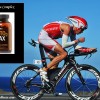
Promotes efficient production of ATP in the mitochondria of cells
Enhances stamina and efficient use of oxygen
Supports metabolic adaptation for diverse activities
Improves mental energy

It was great to see people come out for our second workshop. Team RWB was present to support Daniel Harvey. We met some new people in the community. Attendees received deep blue rub packets and one person won a $15.00 gift certificate. We also heard some great wellness tips. Make sure to come out for our next one. They are free.



Depending on each individual client we will use different approaches to assist with your relationship goals. Some of these include: Cognitive Behavioral Therapy (CBT), Dialectial Behavioral Therapy (DBT), Adventure Based Counseling, Motivational Interviewing, Behavioral Modification, Behavioral Therapy, Skill Development, Individual, Group and Family Therapy.
She provides individual, family and group outpatient counseling for people of all ages. She works with people who may be struggling with relationship issues, anxiety issues, substance abuse and addiction and behavioral addictions, bullying, conflict resolution, grief loss issues, trauma and PTSD, anger management, adult and childhood ADHD, depression, bipolar disorder and other mood disorders. She also assists children and families with parent-child relational issues and behavior modification skill development. She has worked within the school system, inpatient and outpatient settings, in homes, and emergency rooms. Mary Kay has trained youth to help peers on a local suicide hotline and she is certified to train students pursuing their LCSW and Missouri substance abuse credentials.
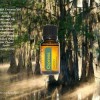
Did you know that INCONTINENCE is the leading cause of nursing home placement for women?
I was talking to a friend who shared that with me and I was surprised to hear that. A book called The Bathroom Key by Kathryn Kassai is described as “a treatment plan for women to cure their own incontinence issues. It also allows women to identify with other women through the anecdotal stories that echo their feelings of isolation and embarrassment and guides the reader to a better understanding of her body and effective remedies.”
On an Essential Oil Blog I saw this: “I just gave a bottle to my grandma for bed wetting and bladder issues. She has used it for 3 days and is in LOVE. She only wakes up once in the night instead of 3-4 times. She was close to wearing Depends and now feels like she will not need to go that way.” -Callie Chinen
Derived from the branches of the tall evergreen tree, Cypress essential oil has a fresh, clean aroma that’s energizing and refreshing. Cypress is frequently used in spas and by massage therapists for its ability to soothe tight, tense muscles, and promote circulation. Cypress can be diffused or inhaled directly to assist with clear breathing and healthy respiratory function. It can be used as a throat gargle for theme same benefits, but should not be swallowed or taken internally. Cypress contains monoterpenes, making it beneficial for oils skin conditions and to stimulate localized blood flow. It has a grounding, yet stimulating effect on emotions, making it a popular oil to diffuse during times of transition or loss.
Clean, fresh, woody, herbaceous
Diffuse, inhale, or gargle at the first signs of throat discomfort.
Rub on chest with doTERRA Fractionated Coconut Oil to support healthy breathing.
Apply to tight, sore muscles or use with a carrier oil for massage.
Mix together Cypress and Grapefruit essential oil with doTERRA Fractionated Coconut Oil and rub on problem areas to help give skin a firmer, more youthful appearance.
Add one or two drops to toner to help reduce oily skin conditions.
Put a drop on the pelvic bone to assist with bladder control.
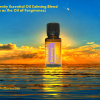
[emc2alert type=”warning” style=”normal” position=”top” visible=”visible” closebtn=”0″ ]CPTG Certified Pure Therapeutic Grade[/emc2alert]
This oil is also known as “The Oil of Forgiveness”.
Serenity essential oil blend calms the mind, relaxes the body, and soothes the soul, providing a safe haven from life’s daily stressors. The essential oils in this must-have blend were meticulously chosen to lessen tension, calm emotions, and leave a peaceful feeling. Serenity is the perfect blend to diffuse at bedtime for a restful night’s sleep, to calm a restless baby or child, or to help reduce the anxiety and stress so many of us feel. Serenity combines the soothing scents of Lavender, Marjoram, Roman Chamomile, and Ylang Ylang with the warming aromas of Hawaiian Sandalwood and Vanilla Bean to create a prized essential oil blend that every home, family, and individual needs.
Diffusion: Use three to four drops in the diffuser of your choice.
Topical use: Apply one to two drops to desired area. Dilute with dōTERRA Fractionated Coconut Oil to minimize any skin sensitivity.
Ingredients:
Lavender Flower, Sweet Marjoram Leaf, Roman Chamomile Flower, Ylang Ylang Flower, Hawaiian Sandalwood essential oils and Vanilla Bean Absolute.
Aromatic Description:
Sweet, warm, powdery