Author: victor

  • Are Bananas Healthy – Should you be eating Bananas? ~ Dr. Axe

    Are Bananas Healthy – Should you be eating Bananas? ~ Dr. Axe

    “Hey guys, Dr. Axe here, and welcome again to the Chopping Block. Today on
    the Chopping Block our special guest is the banana. I will tell you,
    surprisingly one of the most common questions I get from people is: Are
    bananas good for me?

    Now we have heard of some of the great health benefits of bananas, but on
    the other end I think a lot of people worry about the sugar content that’s
    found in certain fruits like bananas today. I will tell you here, bananas
    are teetering on the edge here of the Chopping Block. Let us talk about the
    negatives of bananas, and then let us talk about the positives.

    The negatives, without a doubt, is that it does contain a large amount of
    sugar, and it doesn’t really have much protein or any healthy fat
    whatsoever along with it. One medium sized banana has 27 grams of
    carbohydrates. Fourteen of those grams are sugar. Then it contains about
    one gram of protein and zero grams of fat. So if you’re eating a banana by
    itself, there is no doubt it could affect your blood sugar levels in a
    small amount. That is really the negative side of bananas is right there
    because if you’re a person who is trying to lose weight, if you have
    sensitive blood sugar, bananas, in terms of fruit, are higher on the
    glycemic index, which means it will typically affect your insulin more or
    affect your sugar more compared to most other fruits.

    Now let us talk about the positives with the banana. Bananas are one of the
    most potassium rich foods in the entire world. One single banana has 500 mg
    of potassium. So it is packed with potassium. It has 32 mg of magnesium, so
    it’s really loaded with electrolytes. So if you’re an athlete, if you are a
    person that works out, this is an amazing food for you because again it can
    really help fuel your cells.

    Now another thing in defending the banana is that if you’re comparing this
    banana even to a bowl of oatmeal, this is still lower on the glycemic index
    and has a lower amount of carbohydrates than even healthier grains out
    there like rice and quinoa. So again, this really is a better option
    compared to any other grains out there in my book. But when you’re
    comparing it to other fruits, like berries for instance; berries have more
    antioxidants. They’re higher in fiber. Berries definitely have more
    benefits as well as a lot of other fruits compared to a banana, but bananas
    are still better than grains.

    So what do I say about the banana in closing? Well, here’s what I would
    say. If you’re a person who is trying to lose weight or has some digestive
    issues, I really think if you’re trying to lose weight or have sensitive
    blood sugar, I would remove bananas from your diet, but I would still eat
    them before any other grains. If you’re an athlete or somebody who is
    already pretty lean and healthy and just trying to stay healthy, I think
    bananas are still a great option for you.

    So when it comes to bananas getting chopped, we’re going to spare the
    banana here, and we’re actually going to peel it here instead of chopping
    it. I’m actually about to go on a run, so I’m going to eat a little bit of
    this banana here, because again it’s still packed with potassium, has a
    good amount of fiber, has magnesium, and number one thing that saved that
    banana, it is a real food, unprocessed, unhybridized, completely real.
    Again, the banana is staying here on the Chopping Block.”

  • The Role of Resilience in Mental and Emotional Health

    The Role of Resilience in Mental and Emotional Health

    Being emotionally and mentally healthy doesn’t mean never going through bad times or experiencing emotional problems. We all go through disappointments, loss, and change. And while these are normal parts of life, they can still cause sadness, anxiety, and stress.

    The difference is that people with good emotional health have an ability to bounce back from adversity, trauma, and stress. This ability is called resilience. People who are emotionally and mentally healthy have the tools for coping with difficult situations and maintaining a positive outlook. They remain focused, flexible, and creative in bad times as well as good.

    One of the key factors in resilience is the ability to balance stress and your emotions. The capacity to recognize your emotions and express them appropriately helps you avoid getting stuck in depression, anxiety, or other negative mood states. Another key factor is having a strong support network. Having trusted people you can turn to for encouragement and support will boost your resilience in tough times.

    Taking care of your body is a powerful first step towards mental and emotional health. The mind and the body are linked. When you improve your physical health, you’ll automatically experience greater mental and emotional well-being. For example, exercise not only strengthens our heart and lungs, but also releases endorphins, powerful chemicals that energize us and lift our mood.

    fast_500The activities you engage in and the daily choices you make affect the way you feel physically and emotionally.

    • Get enough rest. To have good mental and emotional health, it’s important to take care of your body. That includes getting enough sleep. Most people need seven to eight hours of sleep each night in order to function optimally.
    • Learn about good nutrition and practice it. The subject of nutrition is complicated and not always easy to put into practice. But the more you learn about what you eat and how it affects your energy and mood, the better you can feel.
    • Exercise to relieve stress and lift your mood. Exercise is a powerful antidote to stress, anxiety, and depression. Look for small ways to add activity to your day, like taking the stairs instead of the elevator or going on a short walk. To get the most mental health benefits, aim for 30 minutes or more of exercise per day.
    • Get a dose of sunlight every day. Sunlight lifts your mood, so try to get at least 10 to 15 minutes of sun per day. This can be done while exercising, gardening, or socializing.
    • Limit alcohol and avoid cigarettes and other drugs. These are stimulants that may unnaturally make you feel good in the short term, but have long-term negative consequences for mood and emotional health.

    In order to maintain and strengthen your mental and emotional health, it’s important to pay attention to your own needs and feelings. Don’t let stress and negative emotions build up. Try to maintain a balance between your daily responsibilities and the things you enjoy. If you take care of yourself, you’ll be better prepared to deal with challenges if and when they arise.

    Taking care of yourself includes pursuing activities that naturally release endorphins and contribute to feeling good. In addition to physical exercise, endorphins are also naturally released when we:

    • Do things that positively impact others. Being useful to others and being valued for what you do can help build self-esteem.
    • Practice self-discipline. Self-control naturally leads to a sense of hopefulness and can help you overcome despair, helplessness, and other negative thoughts.
    • Learn or discover new things. Think of it as “intellectual candy.” Try taking an adult education class, join a book club, visit a museum, learn a new language, or simply travel somewhere new.
    • Enjoy the beauty of nature or art. Studies show that simply walking through a garden can lower blood pressure and reduce stress. The same goes for strolling through a park or an art gallery, hiking, admiring architecture, or sitting on a beach.breathe 1
    • Manage your stress levels. Stress takes a heavy toll on mental and emotional health, so it’s important to keep it under control. While not all stressors can be avoided, stress management strategies can help you bring things back into balance.
    • Limit unhealthy mental habits like worrying. Try to avoid becoming absorbed by repetitive mental habits—negative thoughts about yourself and the world that suck up time, drain your energy, and trigger feelings of anxiety, fear, and depression.

    More tips and strategies for taking care of yourself:

    • Appeal to your senses. Stay calm and energized by appealing to the five senses: sight, sound, touch, smell, and taste. Listen to music that lifts your mood, place flowers where you will see and smell them, massage your hands and feet, or sip a warm drink.
    • Engage in meaningful, creative work. Do things that challenge your creativity and make you feel productive, whether or not you get paid for it—things like gardening, drawing, writing, playing an instrument, or building something in your workshop.
    • Get a pet. Yes, pets are a responsibility, but caring for one makes you feel needed and loved. There is no love quite as unconditional as the love a pet can give. Animals can also get you out of the house for exercise and expose you to new people and places.emotionally
    • Make leisure time a priority. Do things for no other reason than that it feels good to do them. Go to a funny movie, take a walk on the beach, listen to music, read a good book, or talk to a friend. Doing things just because they are fun is no indulgence. Play is an emotional and mental health necessity.
    • Make time for contemplation and appreciation. Think about the things you’re grateful for. Mediate, pray, enjoy the sunset, or simply take a moment to pay attention to what is good, positive, and beautiful as you go about your day.

    Everyone is different; not all things will be equally beneficial to all people. Some people feel better relaxing and slowing down while others need more activity and more excitement or stimulation to feel better. The important thing is to find activities that you enjoy and that give you a boost.

    No matter how much time you devote to improving your mental and emotional health, you will still need the company of others to feel and be your best. Humans are social creatures with an emotional need for relationships and positive connections to others. We’re not meant to survive, let alone thrive, in isolation. Our social brains crave companionship—even when experience has made us shy and distrustful of others.

    Social interaction—specifically talking to someone else about your problems—can also help to reduce stress. The key is to find a supportive relationship with someone who is a “good listener”—someone you can talk to regularly, preferably face-to-face, who will listen to you without a pre-existing agenda for how you should think or feel. A good listener will listen to the feelings behind your words, and won’t interrupt or judge or criticize you. The best way to find a good listener? Be a good listener yourself. Develop a friendship with someone you can talk to regularly, and then listen and support each other.

    Tips and strategies for connecting to others:

    EmotionalHealth_RECT_0

    • Get out from behind your TV or computer screen. Screens have their place but they will never have the same effect as an expression of interest or a reassuring touch. Communication is a largely nonverbal experience that requires you to be in direct contact with other people, so don’t neglect your real-world relationships in favor of virtual interaction.
    • Spend time daily, face-to-face, with people you like. Make spending time with people you enjoy a priority. Choose friends, neighbors, colleagues, and family members who are upbeat, positive, and interested in you. Take time to inquire about people you meet during the day that you like.
    • Volunteer. Doing something that helps others has a beneficial effect on how you feel about yourself. The meaning and purpose you find in helping others will enrich and expand your life. There is no limit to the individual and group volunteer opportunities you can explore. Schools, churches, nonprofits, and charitable organization of all sorts depend on volunteers for their survival.
    • Be a joiner. Join networking, social action, conservation, and special interest groups that meet on a regular basis. These groups offer wonderful opportunities for finding people with common interests—people you like being with who are potential friends.

    emotioal health2


    Sometimes you may have made consistent efforts to improve your mental and emotional health and you still don’t feel good—then it’s time to seek professional help. Because we are so socially attuned, input from a knowledgeable, caring professional can motivate us to do things for ourselves that we were not able to do on our own.

    Red flag feelings and behaviors that may require immediate attention

    • Inability to sleep
    • Feeling down, hopeless, or helpless most of the time
    • Concentration problems that are interfering with your work or home life
    • Using nicotine, food, drugs, or alcohol to cope with difficult emotions
    • Negative or self-destructive thoughts or fears that you can’t control
    • Thoughts of death or suicide

    Contact us at (609) 510-4007 if you are interested in getting help for an emotional issue.

  • dōTERRA® Co-Impact Sourcing™

    Co-impact sourcing will help ensure a long-term supply of CPTG Certified Pure Therapeutic Grade essential oils while helping to strengthen economies in developing countries and improving the livelihoods of our growers around the world.

    Maintaining the high standard of quality set by dōTERRA® for purity, potency, and consistency of our essential oils involves following a proven process that yields industry leading quality. The first step in the process starts with the plants themselves.

    dōTERRA uses a global network of artisans to provide the raw materials—sourcing—used for essential oil production. Where a plant is grown has a major impact on its constitution, which in turn determines its potency. Using local artisans who have grown the source plants for generations ensures that the plants are not only properly cared for, but also grown in an environment that maximizes the essential oils’ potential.

    Additionally, harvesting the right part of the plant at the right time is a major determiner in the quality of an essential oil. Growers have discovered over generations proper harvesting secrets that increase yield and quality of the essential oil.

    Using local artisans to source the raw materials for essential oils has the added benefit of creating industry for that particular community. In many cases, the harvesting of essential oil source plants has created jobs and opportunity where previously there was none. In this way, dōTERRA is helping health-conscious individuals find safe alternatives while also lifting entire communities and giving them hope for the future.

  • Three Tips for Running Downhill ~ Runner’s World

    Three Tips for Running Downhill ~ Runner’s World

     Cindy Kuzma

    Train on descents – without getting hurt – to build strength, boost coordination, and even have some fun.

    When most runners tackle hills, they focus on the difficulty of the climb. But downhill running poses its own set of challenges – and rewards.

    Descending feels easy aerobically, but each step triggers muscle-damaging eccentric contractions in the quadriceps and lower legs, says Greg Wells, Ph.D., an exercise physiologist at the University of Toronto and the author of Superbodies: Peak Performance Secrets from the World’s Best Athletes. On level ground, these muscles shorten as they fire; on declines, they elongate while under tension as they work to control your speed. This creates more micro-tears in each fiber, which stimulates muscle growth but leaves you fatigued and sore. That’s one reason the Boston Marathon, with its four-mile downhill opening stretch, is such a hard course.

    Practicing running down hills prepares your body to handle these eccentric contractions, decreasing the negative effects and improving your performance on net-descent courses like Boston’s. But even if you’re not training for a hilly race, you can benefit from incorporating regular downhill running into your routine: The muscle you build working on the decline translates into faster paces on any terrain. You will be able to run faster with less effort, giving you the ability to perfect your technique at near-top speeds. And then there’s something any kid could tell you: “Downhill training can be a tremendous amount of fun,” Wells says. Here’s how to safely enjoy the way down.

    Select Your Slope

    You can practice downhill running through either focused repeats or an extended run on a hilly route (see “Perfect the Plunge,” below). Either way, you’ll want to choose your hills wisely, says Sean Coster, an exercise physiologist and running coach at Complete Running in Portland, Oregon. Extreme grades – say, 20-percent drops – increase the impact too much (and the risk of ankle, hip, and knee injuries). Instead, look for a gradual slope of no more than eight percent. (To determine the grade, use a GPS watch that tracks elevation: Run up the hill and then scope your data for the elevation change. Divide this by the distance you ran in feet to get the slope – .08 equals eight percent.) Choose softer, more forgiving surfaces, such as grass or gravel, if you’re new to downhill work. But if you’re training for a hilly road race, progress to some paved declines in the months beforehand to practice, says Rebekah Mayer, national training manager at Minneapolis-based Life Time Run.

    Focus On Form

    Use mental cues to optimize your form and reduce your injury risk. Instead of looking at your feet, pretend you have a grapefruit nestled between your chin and your chest, Coster says. This keeps your gaze 10 to 15 meters in front of you and your posture upright. Engage your core and lean forward slightly from the ankles, aligning your upper body over your lower body or even slightly ahead of it – battling your natural tendency to lean backward and slow down, Mayer says. As you descend, shorten your stride and quicken your cadence. That way, you’ll take lighter steps and land more on your midfoot instead of using your heel as a brake. And keep a slight bend in your landing leg to avoid absorbing all the impact in your knee, Wells says.

    Time It Wisely

    If you’re planning for a descent-filled race, begin adding downhill workouts early in your training schedule. “As with any new training type, it’s always best to start small,” Mayer says. Begin with one downhill session every other week. Eventually, you can work up to one or two per week, but schedule another only when you’ve completely recovered from the previous one, Wells says. If you’re running a race with extremely steep downhills, make at least a few of these workouts race-effort runs that include similar terrain, Coster says – but avoid downhill repeats on such sharp declines. And dial things back again as your race nears. Avoid pushing the pace on downhills two to three weeks beforehand, when the risk of injury outweighs the benefits, Mayer advises.

    http://www.runnersworld.com/running-tips/three-tips-for-running-downhill

  • Diatomaceous Earth

    Diatomaceous Earth

    Most of what I have researched says to take Diatomaceous Earth on an empty stomach and to make sure you use Food Grade Diatomaceous Earth.  I have also read warnings to wear a mask so you do not breath it into your lungs and to be careful not to get it into your eyes.   I started researching this when I met a woman in Sedona, AZ who shared with me how she used it with her livestock and even put it in their water.

    diatomaceous earth 2Diatomaceous Earth (often referred to as “DE”) is an off white talc-like powder that is the fossilized remains of marine phytoplankton. When sprinkled on a bug that has an exoskeleton (such as spiders, ticks, cockroaches, ants or fleas) the diatomaceous earth particles stick to an insect and get stuck between its exoskeleton joints. As the insect moves, it gets physically cut up.

    Diatomaceous earth is made from the fossilized remains of tiny, aquatic organisms called diatoms.  Their skeletons are made of a natural substance called silica. Over a long period of time, diatoms accumulated in the sediment of rivers, streams, lakes, and oceans. Today, silica deposits are mined from these areas. Silica is very common in nature and makes up 26% of the earth’s crust by weight. Various forms of silica include sand, emerald, quartz, feldspar, mica, clay, asbestos, and glass.  Food grade diatomaceous earth is 85% silica, and contains some 20 trace minerals. Did you know life can’t exist without silica?  It is essential for the building of healthy bones and teeth, skin, hair, and nails.  As our mineral resources are getting depleted, our food is containing less and less silica.  diatoms (1)

    When taken internally, the diatomaceous earth attracts and absorbs positively-charged pathogens into its cylinder.  It absorbs the things we want to stay away from, like viruses, pathogenic fungi and bacteria, heavy metals, prescription drug residues, pesticides, parasites, radiation,  and sweeps them out of our bodies.  Diatomaceous earth is also very hard. On a scale of “hardness”, if diamonds were a 9, diatomaceous earth would be a 7.  This helps us too.  As this powder makes its way through our digestive tract, it gently “scrubs” the packed on residue we have there and sweeps it out of our bodies.  Organisms such as parasites, lurking in our intestines, are sliced up and killed, and swept away when we empty our bowels, and we are left unharmed.

    Farmers feed gobs of diatomaceous earth (food grade) to animals in the hopes that it will cure whatever ails them. Many farmers swear that the stuff kills all sorts of worms in their critters.

    Health Benefits

    If you’re interested in taking diatomaceous earth, we recommend you start with a small amount. If you choose to continue using DE, you can increase the amount slowly until you feel comfortable. All health benefits mentioned below are from customers’ experiences. Your experience may vary from the following list.

    • – better digestive health
    • – more regular bowel movements
    • – detoxifies
    • – healthier colon
    • – reduced cholesterol
    • – better food absorption
    • – better night’s sleep
    • – clearer skin
    • – stronger teeth and gums
    • – healthier hair and nails
    • – less joint and ligament pain
    • – helps arthritis
    • – less sickness
    • – more energy
    • – soothes burns
    • – insect bites
    • – clears skin rashes
    • – less acne
    • – possible antiparasitic
    • – could lower Candida levels

    How-To Instructions

    1. Get some Juice

    Pour 6 to 8 oz of water or juice in a glass. Then add ½ teaspoon of FOOD GRADE diatomaceous earth.

    2.  Mix it Together

    Add the diatomaceous earth into your glass and stir. Diatomaceous earth will not dissolve in the liquid but will be suspended and distributed evenly in the liquid until given the time to settle. Drink the liquid right after stirring.

    3.  Be Consistent

    Repeat this process daily before a meal. You can increase the amount of diatomaceous earth you use in the liquid until you reach a level that works for you. DiatomaceousEarth.com recommends not exceeding 1 tablespoon per day.

    I am NOT a doctor so I recommend that you do your own research to determine whether it is right for you and how you prefer to use it.

    Radial and pennate diatoms as seen under a microscope with diffierential contrast  illumination.  Specimen preparation by the famous 19 th century Victorian mounting firm, W. H. Watson and Sons, Ltd. England. Diatoms are protists which have shells sculpted out of silicon oxide.  After the living protist has perished the shells remain.  These clear shells are comprised of two halves called valves.  Diatom shells and their corresponding patterns respond to beautifully and artfully to a variety of colorful microscopic illumination techniques.  Many are so intricately detailed that they have long been used as test objects for microscope objectives. There are two major classes of diatoms: centric and pennate.  Centric diatoms have patterns arranged radially, around a central point, known as radial symmetry. Pennate diatoms have bilateral symmetry, left and right matching halves, and are generally needle or boat shaped. When alive, diatoms are brownish green in color a live almost everywhere, from open waters to quiet shallows.  They may live alone or in colonies.   In the mid to late 19th century Victorian era mounters created patterns of them on microscope slides using micro manipulators. Diatoms are a favorite of microscopists for their beauty.  Originally they were used for testing the resolving power of objectives. These are highly sought after. Kingdom: Protists, Phylum: Bacillariophyta Photomicroscope I on Ektachrome Tungsten 35mm color film, with various  illuminations and colors at 40X, 80x on a 4x6 inch print.
    Radial and pennate diatoms as seen under a microscope with diffierential contrast illumination. Specimen preparation by the famous 19 th century Victorian mounting firm, W. H. Watson and Sons, Ltd. England.
    Diatoms are protists which have shells sculpted out of silicon oxide. After the living protist has perished the shells remain. These clear shells are comprised of two halves called valves. Diatom shells and their corresponding patterns respond to beautifully and artfully to a variety of colorful microscopic illumination techniques. Many are so intricately detailed that they have long been used as test objects for microscope objectives.
    There are two major classes of diatoms: centric and pennate. Centric diatoms have patterns arranged radially, around a central point, known as radial symmetry. Pennate diatoms have bilateral symmetry, left and right matching halves, and are generally needle or boat shaped.
    When alive, diatoms are brownish green in color a live almost everywhere, from open waters to quiet shallows. They may live alone or in colonies.
    In the mid to late 19th century Victorian era mounters created patterns of them on microscope slides using micro manipulators. Diatoms are a favorite of microscopists for their beauty. Originally they were used for testing the resolving power of objectives. These are highly sought after.
    Kingdom: Protists, Phylum: Bacillariophyta
    Photomicroscope I on Ektachrome Tungsten 35mm color film, with various illuminations and colors at 40X, 80x on a 4×6 inch print.

    http://npic.orst.edu/factsheets/degen.html

    http://www.richsoil.com/diatomaceous-earth.jsp

    http://www.diatomaceousearth.com/diatomaceous-earth-human/

    http://www.theprairiehomestead.com/2014/01/diatomaceous-earth-homestead.html

    http://www.ncbi.nlm.nih.gov/pubmed/25840631

    http://www.ncbi.nlm.nih.gov/pubmed/21673156

  • Is Your Cookware Killing You?

    You might have healthy, real food inside the pan, but is the pan itself contributing to disease in your body?

    Dr. Josh Axe explains what cookware to avoid and what to use instead.

  • Ask Dr. Hill: Using Essential Oils for Emotional Health

    Ask Dr. Hill: Using Essential Oils for Emotional Health

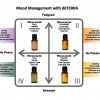
    Emotions play a significant role in our overall health and essential oils can provide tremendous benefits in helping us create emotional stability. In this video, Dr. David K. Hill discusses how essential oils can be used to help our emotional health.


  • CPTG ~ Certified Pure Therapeutic Grade Essential Oils

    CPTG ~ Certified Pure Therapeutic Grade Essential Oils

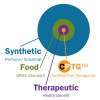
    Every batch of dōTERRA® essential oils is subjected to strict requirements set forth in the CPTG Certified Pure Therapeutic Grade® quality protocol. This protocol ensures potency, purity, and consistency batch to batch.

    The CPTG testing begins immediately after distillation with each oil being reviewed for its chemical composition. A second round of testing is carried out at our production facility to ensure that what was distilled and tested is the same essential oil as was received. A third review of the chemistry of the oil is conducted in a three-phase procedure as the oils are packaged into the bottles we use as consumers. Each of these tests confirms that the essential oil is free of contaminants and unexpected alterations during production.

    The CPTG Certified Pure Therapeutic Grade quality protocol includes the following tests:

    • Organoleptic testing
    • Microbial testing
    • Gas chromatography
    • Mass spectrometry
    • Fourier Transform Infrared spectroscopy (FTIR)
    • Chirality testing
    • Isotopic analysis
    • Heavy metal testing

    While there is a science to the distillation of essential oils, it is also an art. Distillers not only rely on years of experience, they also employ modern technologies and techniques.

    The most common method of extracting essential oils is a low-heat steam distillation process. In this process, pressurized steam is circulated through plant material. The essential oils are liberated from the plant and carried away by the steam. When the steam cools, the water and oils naturally separate and the oil is collected. To ensure the highest quality oil extract with the correct chemical composition, the temperature and pressure must be closely monitored. Too little heat or pressure and the oil will not release; too much, and the oil’s composition and potency will be affected.

    Compression, in which plant parts are pressed to squeeze out the essential oil, is another common method of distillation. Many citrus oils are expressed in this manner.


  • The 25 Golden Rules of Running ~ Runner’s World

    The 25 Golden Rules of Running ~ Runner’s World

     Bob Cooper

    25 of the most universally accepted rules of running.

    Editor’s note: This article originally appeared in Runner’s World a few years ago. The article remains popular online, and the rules are as good now as they were when first published.

    In most cases, these rules started out as a lightbulb over one runner’s head. After a while, that runner told a few running buddies (probably during a long run), word spread, and before you know it, coaches were testing it, sports scientists were studying it, and it evolved from idea to theory to accepted wisdom. Along with each of the rules we present, however, we list the exception. Why? Because, as you also learned in grade school, there’s an exception to every rule.

    1. The Specificity Rule

    The most effective training mimics the event for which you’re training.

    This is the cardinal rule of training for any activity. If you want to run a 10-K at seven-minute-per-mile pace, you need to do some running at that pace. “Runners are best served by running at goal pace and in the expected environment of that race,” says Ann Snyder, Ph.D., director of the human performance lab at the University of Wisconsin-Milwaukee.

    The Exception: It’s impractical to wholly mimic a race–particularly longer distances–in training because it would require extended recovery. So, when doing race-specific training, keep the total distance covered shorter than the goal race, or run at your race pace in shorter segments with rest breaks (interval training).

    2. The 10-Percent Rule

    Increase weekly training mileage by no more than 10 percent per week.

    Joe Henderson, the first editor of Runner’s World, and Joan Ullyot, M.D., author of three women’s running books, first popularized the 10-percent prescription in the 1980s. “I noticed that runners who increased their training load too quickly were incurring injuries,” says Dr. Ullyot.

    The Exception: If you’re starting at single-digit weekly mileage after a layoff, you can add more than 10 percent per week until you’re close to your normal training load.

    3. The 2-Hour Rule

    Wait for about two hours after a meal before running.

    “For most people, two hours is enough time for food to empty from the stomach, especially if it’s high in carbohydrate,” says Colorado sports dietitian and marathoner Cindy Dallow, Ph.D. “If you don’t wait long enough, food will not be properly digested, raising the risk of abdominal cramps, bloating, and even vomiting.”

    The Exception: You can probably run 90 minutes after a light, high-carb meal, while you may need up to three hours after a heavy meal that’s high in protein and fat.

    4. The 10-Minute Rule

    Start every run with 10 minutes of walking and slow running, and do the same to cool down.

    “A warmup prepares your body for exercise by gradually increasing blood flow and raising core muscle temperature,” says Jerry Napp, a Tampa Bay running coach. “The cooldown may be even more important. Stopping abruptly can cause leg cramps, nausea, dizziness, or fainting.”

    The Exception: It takes less than 10 minutes to rev up on warm days.

    5. The 2-Day Rule

    If something hurts for two straight days while running, take two days off.

    Two straight days of pain may signal the beginning of an injury. “Even taking five days of complete rest from running will have little impact on your fitness level,” says Troy Smurawa, M.D., team physician for USA Triathlon.

    The Exception: If something hurts for two weeks, even if you’ve taken your rest days, see a doctor.

    6. The Familiar-Food Rule

    Don’t eat or drink anything new before or during a race or hard workout.

    Stick to what works for you. “Your gastrointestinal tract becomes accustomed to a certain mix of nutrients,” says Dallow. “You can normally vary this mix without trouble, but you risk indigestion when prerace jitters are added.”

    The Exception: If you’re about to bonk, eating something new is probably better than eating nothing at all.

    7. The Race-Recovery Rule

    For each mile that you race, allow one day of recovery before returning to hard training or racing.

    That means no speed workouts or racing for six days after a 10-K or 26 days after a marathon. The rule’s originator was the late Jack Foster, the masters marathon world record holder (2:11:18) from 1974 to 1990. Foster wrote in his book, Tale of the Ancient Marathoner, “My method is roughly to have a day off racing for every mile I raced.”

    The Exception: If your race effort wasn’t all-out, taking fewer recovery days is okay.

    8. The Heads-Beats-Tails Rule

    A headwind always slows you down more than a tailwind speeds you up.

    So expect to run slower on windy days. “I disregard the watch on really windy days because headwinds cost me 15 to 25 seconds a mile, and I only get a portion of that back after I turn around,” says Monte Wells, a longtime runner in Amarillo, Texas, America’s windiest city. “The key is to monitor your effort, not your pace. Start against the wind, so it’s at your back in the second half.”

    The Exception: On point-to-point runs with the wind at your back, you’ll fly along faster than usual.

    9. The Conversation Rule

    You should be able to talk in complete sentences while running.

    A recent study found that runners whose heart and breathing rates were within their target aerobic zones could comfortably recite the Pledge of Allegiance. Those who couldn’t were running faster than optimal.

    The Exception: Talking should not be easy during hard runs, speedwork, or races.

    10. The 20-Mile Rule

    Build up to and run at least one 20-miler before a marathon.

    “Long runs simulate the marathon, which requires lots of time on your feet,” says Gina Simmering-Lanterman, director and marathon coach of the Denver Fit training program. “And knowing that you can run 20 miles helps you wrap your head around running 26.2.”

    The Exception: Some coaches believe experienced marathoners can get by with a longest run of 16 to 18 miles, while other coaches suggest runs up to 24 miles.

    11. The Carbs Rule

    For a few days before a long race, emphasize carbohydrates in your diet.

    “Carbo-loading” became the marathoner’s mantra after Scandinavian studies in 1967 suggested cramming down carbs following a period of carb depletion produced super-charged athletes. Experts now say simply emphasizing carbs a few days before a race over two hours works just as well.

    The Exception: There’s a word for carbo-loading during regular training or before a short race: gluttony.

    12. The Seven-Year Rule

    Runners improve for about seven years.

    Mike Tymn noticed this in the early 1980s and wrote about it in his National Masters News column. “My seven-year adaptation theory was based on the fact that so many runners I talked to ran their best times an average of seven years after they started,” he recalls.

    The Exception: Low-mileage runners can stretch the seven years to well over a decade before plateauing.

    13. The Left-Side-Of-The-Road Rule

    To keep safe, run facing traffic.

    “While running, it’s better to watch the traffic than to have it come up from behind you,” says Adam Cuevas, a marathoner and chief of the Enforcement Services Division of the California Highway Patrol. It’s the law in California and many other states to run on the left side unless you’re on the sidewalk.

    The Exception: The right side of the road is safer when running into leftward blind curves where there’s a narrow shoulder. The right side can also be safer if there’s construction on the left side.

    14. The Up-Beats-Down Rule

    Running uphill slows you down more than running downhill speeds you up.

    So, you can expect hilly runs to be slower than flat runs. “You don’t get all of the energy that you expend going uphill back when you run downhill,” explains Nimbus Couzin, Ph.D., a marathon-running physics instructor at Indiana University Southeast. “That’s because when your feet strike the ground on a descent, a lot of energy is lost.”

    The Exception: When you run point-to-point with a net elevation drop,your average pace should be faster than on a flat course.

    15. The Sleep Rule

    Sleep one extra minute per night for each mile per week that you train.

    So if you run 30 miles a week, sleep an extra half hour each night. “Sleep deprivation has a negative impact on training,” says David Claman, M.D., director of the University of California-San Francisco Sleep Disorders Center. “The average person needs seven and a half to eight hours of sleep, so increase that amount when you’re training.”

    The Exception: The extra sleep may not be necessary for some high-energy folks.

    16. The Refueling Rule

    Consume a combination carbohydrate-protein food or beverage within 30 to 60 minutes after any race, speed workout, or long run.

    “You need an infusion of carbs to replace depleted muscle glycogen, plus some protein to repair and build muscle,” says Nancy Clark, R.D., author of Food Guide for Marathoners. “Ideally, the carb-protein ratio should be 4-to-1. Some examples would be 150 to 300 calories of low-fat chocolate milk, a recovery-sports drink, flavored yogurt, or a bagel and peanut butter.”

    The Exception: Immediate refueling is less important if you aren’t running hard again within 24 hours.

    17. The Don’t-Just-Run Rule

    Runners who only run are prone to injury.

    “Cross-training and weight training will make you a stronger and healthier runner,” says TriEndurance.com multisport coach Kris Swarthout. “Low- and nonimpact sports like biking and swimming will help build supporting muscles used in running, while also giving your primary running muscles a rest.”

    The Exception: The surest way to run better is to run. So if your time is limited, devote most of it to running.

    18. The Even-Pace Rule

    The best way to race to a personal best is to maintain an even pace from start to finish.

    Most of the 10,000-meter and marathon world records set in the last decade have featured almost metronome-like pacing. “If you run too fast early in the race, you almost always pay for it later,” warns Jon Sinclair, the U.S. 12-K record holder and now an online coach (anaerobic.net).

    The Exception: This doesn’t apply on hilly courses or on windy days, when the objective is to run an even effort.

    19. The New-Shoes Rule

    Replace running shoes once they’ve covered 400 to 500 miles.

    “But even before they have that much wear,” says Warren Greene, Runner’s World gear editor, “buy a new pair and rotate them for a while. Don’t wait until your only pair is trashed.” Consider shoes trashed when the spring is gone.

    The Exception: A shoe’s wear rate can vary, depending on the type of shoe, your weight, your footstrike pattern, and the surfaces you run on.

    20. The Hard/Easy Rule

    Take at least one easy day after every hard day of training.

    “Easy” means a short, slow run, a cross-training day, or no exercise at all. “Hard” means a long run, tempo run, or speed workout. “Give your body the rest it needs to be effective for the next hard run,” says Todd Williams, a two-time U.S. Olympian and online coach at pushthepace.com. Apply the hard/easy rule to your monthly and yearly training cycles by treating yourself to one easy week each month, and one easy month each year.

    The Exception: After the most exhausting long runs and speed workouts, especially if you’re 40 or older, wait for two or even three days before your next tough one.

    21. The 10-Degree Rule

    Dress for runs as if it’s 10 degrees warmer than the thermometer actually reads.

    To put it another way, dress for how warm you’ll feel at mid-run–not the first mile, when your body is still heating up. This means choosing the right apparel. (See the “Dress for Success” table) “On cold days, the new soft-shell tops and tights are light, warm, and breathable,” says Emily Walzer, fabrics editor for Sporting Goods Business Magazine. “On warm days, wear a lightweight performance fabric next to your skin, which will disperse sweat through evaporation.”

    The Exception: There’s a limit to how many clothes you can take off without getting arrested, so if it’s in the 70s or warmer, wear minimal lightweight, light-colored apparel.

    Dress for Success
    Here’s a cheat sheet to help you dress appropriately for your runs, no matter what the thermometer says. This chart factors in the 10-Degree Rule but doesn’t account for a significant windchill. On very windy days, you may need to dress warmer.
    TEMP
    (in degrees)
    BASIC APPAREL
    above 70 Lightweight/light-colored singlet and shorts
    60 to 69 Tank top or singlet and shorts
    50 to 59 T-shirt and shorts
    40 to 49 Long-sleeve shirt and tights or shorts
    30 to 39 Long-sleeve shirt and tights
    20 to 29 Two upper-body layers and one lower-body layer
    10 to 19 Two upper-body layers and one lower-body layer
    0 to 9 Two/three upper-body layers, one/two lower-body layers
    below 0 Three upper-body layers, two lower-body layers

    22. The Speedwork-Pace Rule

    The most effective pace for VO2-max interval training is about 20 seconds faster per mile than your 5-K race pace.

    The best way to increase your aerobic capacity and long-distance speed is through VO2-max interval training. A pioneer of VO2-max training is Jack Daniels, Ph.D., coach at the Center for High Altitude Training in Flagstaff, Arizona. “By stressing your aerobic system,” he says, “this pace optimizes the volume of blood that’s pumped and the amount of oxygen that your muscle fibers can use.”

    The Exception: The exact pace is closer to 10 seconds faster per mile than 5-K race pace for fast runners, and 30 seconds faster per mile for slower runners.

    23. The Tempo-Pace Rule

    Lactate-threshold or tempo-run pace is about the pace you can maintain when running all-out for one hour.

    This pace is about 20 seconds slower per mile than your 10-K race pace, or 30 seconds slower per mile than 5-K race pace. “The key benefit of this pace is that it’s fast enough to improve your threshold for hard endurance running, yet slow enough that you don’t overload your muscles,” says Daniels. The ideal duration of a tempo run is 20 to 25 minutes.

    The Exception: The exact pace is less than 20 seconds slower per mile than 10-K race pace for faster runners and slightly more than 30 seconds slower per mile than 10-K race pace for slower runners.

    24. The Long-Run-Pace Rule

    Do your longest training runs at least three minutes per mile slower than your 5K race pace.

    “You really can’t go too slow on long runs,” says RW “Starting Line” columnist Jeff Galloway, “because there are no drawbacks to running them slowly. Running them too fast, however, can compromise your recovery time and raise your injury risk.”

    The Exception: Galloway says you should run even slower on hot days.

    25. The Finishing-Time Rule

    The longer the race, the slower your pace.

    How much slower? Jack Daniels and J.R. Gilbert spent years compiling a table (see “Predict Your Performance”) that shows how much you should expect to slow down from one race distance to the next. “We did some curve-fitting to come up with a formula that generates a pseudo-VO2-max for each race time,” says Daniels. They sweated the math; now you just need to sweat the race.

    The Exception: Terrain, weather, or how you feel on race day could all throw off the table’s accuracy.

    Predict Your Performance
    Want to know how fast you should be able to run a marathon without actually running one? Look for your most recent race time in one of the columns on the left, then follow it across to your predicted marathon finish time. The chart is based on the best times from runners of various ability levels.
    1-MILE 5-K 10-K HALF-MARATHON MARATHON
    4:20 15:00 31:08 1:08:40 2:23:47
    4:38 16:00 33:12 1:13:19 2:33:25
    4:56 17:00 35:17 1:17:58 2:43:01
    5:14 18:00 37:21 1:22:38 2:52:34
    5:33 19:00 39:26 1:27:19 3:02:06
    5:51 20:00 41:31 1:31:59 3:11:35
    6:09 21:00 43:36 1:36:36 3:21:00
    6:28 22:00 45:41 1:41:18 3:30:23
    6:46 23:00 47:46 1:45:57 3:39:42
    7:05 24:00 49:51 1:50:34 3:48:57
    7:24 25:00 51:56 1:55:11 3:58:08
    7:42 26:00 54:00 1:59:46 4:07:16
    8:01 27:00 56:04 2:04:20 4:16:19
    8:19 28:00 58:08 2:08:53 4:25:19
    8:37 29:00 1:00:12 2:13:24 4:34:14
    8:56 30:00 1:02:15 2:17:53 4:43:06
    Source: “Oxygen Power: Performance Tables for Distance Runners,” by Jack Daniels and J.R. Gilbert.


  • Sonny Hill Much More than a Member of the Philadelphia Sports Hall of Fame

    Sonny Hill Much More than a Member of the Philadelphia Sports Hall of Fame

    While I was looking over my post on apple cider vinegar today, I couldn’t help but think about a man who has impacted so many people from the city of Philadelphia.  I remember him speaking it about apple cider vinegar many times.  I also remember him stopping a game when a girl cursed at the official and he told her to leave.  He would come to the games and watch.  He was there and knew what was happening.  I played on the South Philadelphia team because NJ didn’t have a team in this league and it was recommended to help improve my game.  We practiced with the boys most of the time and they were coached by a couple of very tall and disciplined POs in the city, T and Claude.  A teammate and I got rides over to practice with a man whose son played for the boys team who was also from our area.  My dad would come to the games and take my friend and I to our next game back in NJ for our high school.  That was how my summer went most days in high school and I loved it.

    Sonny Hill

    William Randolph “Sonny” Hill (born July 22, 1936) is a former basketball player and announcer. He is a member of the Philadelphia Sports Hall of Fame, and current sports radio personality in Philadelphia Pennsylvania. He also serves as an executive advisor for the Philadelphia 76ers. He is known as Mr. Basketball in Philadelphia for founding the eponymous Sonny Hill League and for his many contributions to the game.


    He is referred to as “The Mayor of Basketball” in Philadelphia.

    Sonny’s influence goes beyond the basketball court.

    He is known for his roles as a 76ers executive, radio host, broadcaster, counselor and mentor to thousands of young men.

    He has been acknowledged for his ability to reach kids through the game of basketball to become better people.

    He co-founded the Charles Baker Memorial Summer League (1960).

    His Baker League would become the top off season showcase of pro basketball talent.

    He has been recognized as the oldest and most prestigious professional summer league in the country.

    He developed the Sonny Hill Community Summer League as an amateur adjunct for college, high school, and pre-high school players (1968).

    The league presents an alternative to the challenges of the street and provides participants with discipline, guidance, and direction.

    It offers students tutoring and career counseling programs in addition to basketball.

    It’s been said that the Sonny Hill League has done more to battle the perils of gangs and drugs and promote life skills than any other program in the city.


    He has been honored with over 25 civic awards including numerous “Man of the Year” designations.

    He was an NBA Commentator for CBS Sports (1974-78).

     He continues to host a weekly talk show on sports radio 610 WIP-AM.

    He was named one of the 100 most influential minorities in sports by Sports Illustrated (2004).

    He was a finalist for the Mannie Jackson Basketball Human Spirit Award presented by the Naismith Basketball Hall of Fame (2008). It honors individuals “who have incorporated basketball into their efforts to contribute to the greater good of society”.