
Contact Mary Kay to enroll and get your free Lifelong Vitality Pack! 609-510-4007
Contact Mary Kay to enroll and get your free Lifelong Vitality Pack! 609-510-4007

We are fired up about the upcoming events!
The month of May is dedicated to honoring our Team RWB military veterans who we lost in 2018. At the end of the month (May 27th) we’ll be doing The Murph in honor of LT. Michael P. Murphy, a navy seal. Each week of the month we’ll be honoring a different militaryTeam RWB member with a workout that will eventually prepare us for the full out Murph at the end of the month. Our workouts will take place at Phelps Grove Park at 950 E Bennett St, Springfield, MO 65807. These are our weekly Sunday Funday and Tuesday Throwdown workout groups.
Week One is in honor of two Eagle Leaders that were killed in the Borderline Bar & Grill shooting in November 2018 in Thousand Oaks, CA. (Daniel Manrique and Justin Meek) Every part of our workout will help us remember these two heroes. Please come out and work hard in remembrance of them.
WeekTwo is dedicated to Eagle Leader and CrossFit enthusiast Katy Young. Katy was an Eagle Leader in the Cincinnati Chapter. This week’s workout will be a little more difficult than week one.
Week Three is dedicated to Cadre Roony. This week’s workout was created when Cadre Roony was diagnosed with Stage IV pancreatic cancer. GORUCK worked with him to put this WOD together so that you can complete this virtual WOD in support of Cadre Roony. Cadre Roony passed away on April 3rd, 2019 after his battle with pancreatic cancer. Remember these workouts are on Sunday’s at 9:00 a.m. and Tuesday’s at 6:00 p.m.The new location is Phelps Grove Park located at 950 E Bennett St, Springfield, MO 65807. Look for Sean!
Please go to our webpage for the dates and times for these events. Make sure to register for each event and check in when you get there. If you have any questions, please feel free to contact me or ask the leader at your event.
Don’t forget to meet up with Kesta for our Run groups that meet on Monday’s and Tuesday’s at 6 p.m. and Saturday’s at 7:30 a.m.
On May 9th, our new “Can Do Hiking Team” will meet at Brookline Park at 6 p.m. The location will rotate between Lake Springfield and Brookline Park. The leaders are Sgt Robert Crampton Retired US Army and his wife, Ann. Robert is the President- CEO- Founder of Volunteers for Outdoor Missouri, Inc. The first and third weeks in the month will be at Lake Springfield. The second and fourth weeks are at Brookline Park. When the hike is at Lake Springfield, we will meet at the Boathouse. When it is at Brookline Park, we will meet at the Pavillion.
On May 17th (Friday) join us for our Coffee and Conversation at 6:00 p.m. to 8:00 p.m. We will be at Cafe B-29 at 1751 W State Hwy J, Ozark, MO 65721. It is across the street from Lamberts in Ozark.
On May 19th we’d like to encourage everyone to Join Ruck 417 in their Memorial Day Ruck. To register go to memorialruck.com.
On May 22nd at 5:30 p.m., we are also joining Ruck 417 on the Thursday prior to Memorial weekend. We will be placing flags at each headstone at the Missouri National Veterans Cemetery. Flags will be provided by the cemetery.
We are rescheduling The Military History Ruck and Run Obstacle Course that was scheduled for Memorial Day weekend to Sunday September 8th. Instead, we will meet that weekend (Sunday) for a hike and kayak/canoe on May 26th at HahaTonka State Park. Please come out and join us. We can meet at the 14.5 mile marker to put kayaks or canoes in the Big Niangua River Trail and go up the river toward Tunnel Dam and Lake Niangua. Remember we will meet at Missouri D (mile marker 14.5) in Camdenton, MO 65020.
If you would like to work as a volunteer for the Military History Ruck and Run Obstacle Course, please let us know now. We need people at the obstacles to direct people and ask the questions. To register, please go to this link: http://militaryhistoryrun.com/ We’re looking forward to seeing you!
My husband and I watched this on Netflix. If you are looking for something uplifting, this is a good pick. This is the story of a man who had everything but felt empty. He decided to travel the world “on kindness”. He found it in most places. People who had nothing gave from their hearts. It was touching.
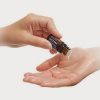
The sense of smell is a tool that can elicit powerful physiologic, mental, and emotional responses. Essential oils are quickly absorbed by the smell receptors, which have a direct link to the limbic system by way of the olfactory nerve. The limbic system is part of the brain that supports a variety of functions including smell, emotions, behavior, and memory. For this reason, essential oils have an especially powerful effect via aromatic application.
Some essential oils induce uplifting or invigorating effects, while others are more calming. Diffusion is one of the simplest methods for using essential oils aromatically. Diffusers that use cold air or water are ideal. However, using essential oils aromatically does not require any special diffusing devices.
You can achieve the same health benefits by simply placing a few drops of essential oil in the palm of your hand that is then cupped around the nose as you breathe deeply.
Additional aromatic uses For Essential Oils Include:
Topical application is a very effective method for applying essential oils. Because essential oils have low molecular weights and are lipid soluble, they easily penetrate the skin. Once absorbed, they stay in the applied area for a localized benefit.
Although essential oils are readily absorbed, there are many ways to increase absorption. Using a light massage will increase the blood flow to the area of application, in turn improving distribution throughout the body. Use of a carrier oil can also increase absorption, especially in skin that is dry or flaky as it helps moisturize the skin and slow evaporation of the oil.
To decrease the likelihood of developing a skin sensitivity, especially on young or sensitive skin, it is advisable to use a carrier oil (such as Fractionated Coconut Oil) to dilute more potent oils and when trying an oil for the first time. The recommend dilution ratio is typically one drop of essential oil to three drops of carrier oil.
It’s always advisable to use several small doses throughout the day rather than a single large dose. Start with the lowest possible dose (1–2 drops). A topical dose can be repeated every 4–6 hours as needed. Because every individual is unique, the dose will vary for each individual based on size, age, and overall health status.
Beneficial Areas You Can Apply Essential Oils
Other Effective Methods of Topical Application
Sensitive Areas to be Avoided:
Certain essential oils have a rich culinary history and can be used as dietary supplements supporting a variety of healthy conditions. When you sprinkle cinnamon on your oatmeal, sip a mug of peppermint tea, or add fresh basil leaves to your spaghetti, you are actually consuming some volatile aromatic essential oil compounds.
Essential oil contributes many health benefits as well as flavoring and aroma properties to foods. When in their concentrated form, essential oils can be used as dietary supplements for more targeted and potent health benefits. Internal use is a very safe and effective method of application because of the sophisticated physiologic processes of our bodies.
When ingested, essential oils directly enter the blood stream via the gastrointestinal tract, where they are transported throughout the rest of the body. Essential oils are lipid soluble so they are readily transported to all organs of the body, including the brain. Then, like all things we consume, essential oils are metabolized by the liver and other organs and are then excreted.
The composition of essential oils is highly complex. Each constituent possesses a unique set of biochemical properties that react with cells and organs in different ways. Although these mechanisms of action are not completely understood, the positive end results have been demonstrated. However, the body is only equipped to handle appropriate doses of essential oils.
Proper dosing according to labeling recommendations and other professional guidelines should be strictly followed to avoid toxicity.
Effective Methods of Internal Application
Want to learn more about how to use essential oils? Call (609) 510-4007 or Go to http://mydoterra.com/ozarkswellness

When you choose doTERRA, you are choosing essential oils gently and carefully distilled from plants that have been patiently harvested at the perfect moment by experienced growers from around the world for ideal extract composition and efficacy.
Each doTERRA essential oil is also carefully and thoroughly tested using the strict CPTG Certified Pure Therapeutic Grade® quality protocol. Experienced essential oil users will immediately recognize the superior quality standard for naturally safe, purely effective therapeutic-grade doTERRA essential oils.
While there is a science to the distillation of essential oils, it is also an art. Distillers not only rely on years of experience, they also employ modern technologies and techniques.
The most common method of extracting essential oils is a low-heat steam distillation process. In this process, pressurized steam is circulated through plant material. The essential oils are liberated from the plant and carried away by the steam. When the steam cools, the water and oils naturally separate and the oil is collected. To ensure the highest quality oil extract with the correct chemical composition, the temperature and pressure must be closely monitored. Too little heat or pressure and the oil will not release; too much, and the oil’s composition and potency will be affected.
Steam Distillation
Steam distillation is the most common way to extract aromatic compounds (essential oil) from a plant. During the steam distillation process, steam passes through the plant material. The combination of heated steam and gentle pressure causes the essential oil to be released from microscopic protective sacs. As the vapor mixture flows through a condenser and cools, it yields a layer of oil and a layer of water. The essential oil rises to the top and is separated from the hydrosol (floral water) and collected.
Some have asked about the difference between first distillations in comparison to complete distillations. The temperature for steam distilling is usually between 140–212 degrees Fahrenheit. Since different plants require different pressures, times, and temperatures, using this particular distillation method makes it possible to adjust the temperature based on the plant type, making it a very effective and precise way to obtain the purest compounds.
Expression
Unlike steam distillation, expression, sometimes referred to as “cold pressed,” does not involve heat. In this process, oil is extracted from the product under mechanical pressure. doTERRA uses expression to extract all of its citrus oils, such as Wild Orange, Lemon, Lime, Bergamot, and Grapefruit, from the rind.
Proper distillation requires a consideration for the uniqueness of pressure, temperature, time, and harvesting practices, each of which may be as diverse as the plants themselves. A poor distillation process can alter or destroy the necessary aromatic compounds that comprise the essential oil, leaving a substance far different from the intended goal and something that would not be used to support health and wellness. For this reason, the best distillation artisans dedicate their efforts and work to only a few select plants. This focused effort develops proper knowledge and experience, helping ensure congruency between the oil chemistry of the plant and its distilled form.
Want to learn how to use essential oils? Call (609) 510-4007 or Go to http://mydoterra.com/ozarkswellness
If you have ever enjoyed the scent of a rose, you’ve experienced the aromatic qualities of essential oils. These naturally occurring, volatile aromatic compounds are found in the seeds, bark, stems, roots, flowers, and other parts of plants. They can be both beautifully and powerfully fragrant. Essential oils give plants their distinctive smells, essential oils protect plants and play a role in plant pollination. In addition to their intrinsic benefits to plants and their beautiful fragrance, essential oils have long been used for food preparation, beauty treatment, and health-care practices.
But what exactly is a volatile aromatic compound? In short, these compounds are small organic molecules that tend to change quickly from their solid or liquid state to a gas at room temperature. They are called volatile because they change state quickly. When you first open a bottle of essential oil, you instantly notice that the aroma is potent and you can smell it typically even from some distance. The physical and chemical properties of the volatile aromatic compounds that compose essential oils allow them to quickly move through the air and directly interact with the olfactory sensors in the nose. Such unique properties make essential oils ideal for applications inclusion in aromatherapy – using these compounds from plants to help maintain a healthy mind and body – as well as other applications. The type of volatile aromatic compounds present in an essential oil determines both the oil’s aroma and the benefits it offers.
Over 3,000 varieties of volatile aromatic compounds have been identified to date. The nature of an essential oil varies from plant to plant, within botanical families, and from species to species. The delicate ratio of aromatic constituents found in any given essential oil are what make it unique and give it specific benefits.
Even with pure essential oils the composition of the oil can vary depending on the time of day, season, geographic location, method and duration of distillation, year grown, and the weather, making every step of the production process a critical determinant of the overall quality of the essential oil product.
Essential oils can be used for a wide range of emotional and physical wellness applications. They can be used as single essential oils or in complex essential oil blends depending on user experience and desired benefit.
Want to learn how to use essential oils? Call (609) 510-4007 or Go to http://mydoterra.com/ozarkswellness

We are working together with Ultramax/Fleet Feet to make this a great event.
We will be working at one or two of the water stations depending on how many people volunteer to help us out.
We also hope to see you out there running and wearing your eagle.
When you say that you’re interested please let me know if you plan to work at the water stations or participate in the run. Here is a link to register for the run:
https://
Anyone that would like to sign up to volunteer can sign up through our volunteer platform here – http://

Come on out to a meet and greet with Team Rubicon this Friday at the Mobile training Center in Springfield MO from 6:00pm to 8:00pm. We will be joining together with Team Rubicon and the Mission Continues on April 1st for our Run As One event. (3659 E Sunshine St, Springfield,
What is Run As One
In honor of Marine veteran Clay Hunt, an original member of Team Rubicon who took his own life after battling PTS and depression, Team Rubicon, Team Red White and Blue, and The Mission Continues will partner to participate in the annual Run as One on April 1, 2017. The event will not only serve as the celebration of a continued partnership, but will be a symbol of leadership, action, and collaboration across the veterans support landscape.
Why We Do… What We Do
Our organizations understand the challenges associated with returning home from war. Combat affects every veteran. While some wounds are visible, many are not. Guilt, survivor’s remorse, post-traumatic stress, and anxiety are all too common among those who have served in Iraq and Afghanistan. We acknowledge and accept these challenges.
We Are Doing Something About It
Our teams are a collection of Doers. We have built programs that allow veterans to proactively combat their challenges with a heavy dose of purpose, camaraderie, and accomplishment. Veterans are an incredibly strong population and when connected to their community will do amazing things. The solution is within all of us.
Make a commitment to each other, your community, and yourself.
For more information on a run near you please contact your RWB local chapter or community. To find your local chapter or community please click this link, https://www.teamrwb.org/

Team RWB Springfield March 2017 Events
Follow us on Facebook for updates and additions: https://www.facebook.com/groups/1458192377772810/
Cadence is the speed at which a person is pedaling. Cyclists measure this in revolutions per minute, or rpm. So, if one foot pedals a full circle about once every second, you are cycling at 60 rpm. Understanding how it affects your performance is really helpful.
The average cyclist pedals at about 60 rpm, but advanced cyclists pedal at much higher cadences, from at least 80 rpm to more than 100 rpm. When I was training with cycling silver medalist Brian Walton’s cycling group in Philadelphia, they suggested that we keep our cadence at 90 rpm. We each had cards to help us figure our goals and it was pretty sophisticated. It was great to work out with his group because he also sent us tips in the form of articles about cycling strategies called “Training Peaks”. There are a bunch of tools you can use to help you know what your rpm is like Garmin makes a great tool that you can use but most bike shops have less expensive items that work just as good.
This is one way to look at it. If you are weight lifting and doing curls with a 30 pound weight, how many single arm curls could you do? 10? 20? 30? Now, how many could you do with a 5 pound weight? You could go all day, right? Cycling with an easier gear works on the same principle. Gears play a large role in cadence and how it translates into performance. It’s easier to pedal on a low gear, but you’ll have to sustain a very high cadence to move quickly. High gears, on the other hand, let you go faster on a lower cadence, but they require you to push harder to pedal.
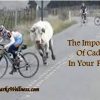
To avoid fatigue and wasted energy, you need to find a good balance and shift gears as needed to maintain the most comfortable cadence. But as you improve your fitness, you’ll be able to improve your overall performance at higher cadences. Cadence drills will also be important for improving endurance, which is especially helpful for triathletes. You never know what may happen on a ride and as the feature photo for this post shows, and it’s important to be able to kick it up if something unexpected occurs. Click on the photo next to this paragraph to link to some training tips from “Training Peaks”. This article was from 2014 and describes 6 ways to build power and a smooth pedal stroke. If you like this article, contact us for some natural ways to improve your cycling performance. You can reach us at: 609-510-4007. If you are military and looking for people to cycle with we’d especially love to connect with you. Check out our link for Team RWB Springfield. Happy Trails!